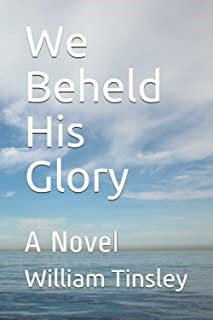
What Others Say

Bill, I have for years read your column and I am always impressed by your insight, intellect, storytelling, and theological soundness. Your pieces are joy to read and always leave me with thoughts that I reflect upon and recall later with gratefulness. -Bradley Toben, Dean Emeritus, Baylor School of Law

Monday, January 24, 2022

Finishing Well

 One of the great lessons taught in every sport is the importance of finishing well.  An athlete or a team can stumble at the start, but it is how they finish that makes the difference.

 In another “ice-bowl” at Lambeau field last week wind-chills hovered near zero, Green Bay took the opening kickoff and drove the field for a touchdown. Most assumed the 49ers from balmy San Francisco, were “toast.” Their quarterback was playing with an injured thumb and the Packers were coming off a bye week.  But, as the temperature dropped and snow covered the field, the game turned on a blocked field goal and a blocked punt.  As time expired, the stunned crowd watched San Francisco’s kick disappear through the snow-shrouded uprights.  The 49ers won 13-10.

 On November 26, 1994, 30,000 fans filled Texas Stadium to watch John Tyler play Plano East in a high school football playoff game.  With three minutes and three seconds left, John Tyler led the game 41 to 17.  On the next play, Plano East scored a touch down, then proceeded to recover three on-side kicks to score three more.  With 24 seconds remaining, Plano East took the lead 44-41.  They kicked off to John Tyler whose returner took the ball on his three yard line and returned it 97 yards.  Final score: John Tyler 48, Plano East 44. You never know what might happen if you don’t give up … much like the Chiefs and the Bills on Sunday night.  Just ask Ton Romo.

 Robert Cheruiyot of Kenya won the Boston Marathon four times.  He was striding triumphantly across the finish line in the Chicago Marathon in 2006 when he tripped.  Although he won the race by falling across the finish line, he had to be carried away in a wheel chair. 

 Most of us can make a good start at whatever we choose.  Everyone can sprint at the beginning of a race, but, what matters most is how we finish. 

 Paul didn’t make a very good start.  Known in his youth as Saul, he pursued blind ambition for advancement, proudly searching out Christians and throwing them in jail, both men and women.  He assisted in the cruel execution of Stephen, an innocent man, stoned to death as the first martyr following Jesus’ resurrection.

 But, following his conversion to Christ, he lived a consistent life of faith and finished well.  Looking back over his life the Apostle Paul stated, “I have fought a good fight, I have finished my course, I have kept the faith.”

 When Jesus prepared for the cross, he said to the Father, “I have finished the work you gave me to do.”  The last word he spoke before he died was, tetelestai, “it is finished.”  He had demonstrated God’s glory on earth in a perfect, sinless life and “paid in full” the penalty for our sins so that we might have eternal life with Him in Heaven.

 You might stumble today.  You might regret some things in your past. But a race is still to be run and God gives to everyone the opportunity to get back up, to continue their race and to finish well.

Monday, January 17, 2022

Overcoming Adversity

 We all experience moments when it seems like nothing good can come of the misfortune that has befallen us.  But God has a way of taking the worst that can befall us and giving us opportunity to use it for good.

 On July 30, 1967, Joni Eareckson dove into the waters of Chesapeake Bay.  She was eighteen years old.  It was the last time she would be able to use her arms or legs. Striking her head in the shallow waters, she suffered a broken neck that left her a permanent quadriplegic. According to her story in Joni, she sank deeper into anger and depression with suicidal thoughts and spiritual doubt.  But, over time, she emerged with a faith that inspired others and created world-wide change for the handicapped. 

 Controlling a brush with her teeth, she became an accomplished artist, wrote 40 books, and recorded several music albums.  In 1979 she founded Joni and Friends, a Christian ministry to the disabled throughout the world. Her organization, Wheels for the World, collects wheel chairs that are refurbished by prison inmates and distributed to disabled children and adults in developing countries.

 Rachel Scott was 17 when she was gunned down as the first murder victim at Columbine High School on April 20, 1999.  Rachel’s Christian witness and her vision for acts of kindness that can make a difference inspired Rachel’s Challenge, a movement in her memory.  Rachel’s Challenge has reportedly touched more than 20 million students worldwide in an effort to reduce violence and teen suicide.

 According to the Bible, Joseph was thrown into the well by his brothers and sold as a slave into Egypt.  Years later he become Prime Minister in Egypt and was able to rescue his family during a widespread famine.  Confronted by his brothers who sold him into slavery, Joseph said, "As for you, you meant evil against me, but God meant it for good in order to bring about this present result, to preserve many people alive." (Genesis 50:20)

Most of us won’t be able to start an organization like Joni and Friends, or Rachel’s Challenge. And only a few can rise to prominence like Joseph. But all of us can comfort someone else once we have suffered injury or loss.  (2 Corinthians 1:4). 

 Peter recognized that all of us experience difficulty and pain.  In his letter he wrote, "Dear friends, do not be surprised at the fiery ordeal that has come on you to test you, as though something strange were happening to you. But rejoice inasmuch as you participate in the sufferings of Christ, so that you may be overjoyed when his glory is revealed." (1 Peter 4:12-13)

 The Apostle Paul wrote, "And not only this, but we also exult in our tribulations, knowing that tribulation brings about perseverance; and perseverance, proven character; and proven character, hope; and hope does not disappoint, because the love of God has been poured out within our hearts through the Holy Spirit who was given to us." (Romans 5:3-5).

 We each must work through our own suffering and pain, trusting God to give us strength to discover the good that He wants to bring into our lives. Sometimes it takes many years for this to come into focus.  Sometimes, we never see it.  At those times we can only live by faith.  When something terrible and confusing happens to us, we always have a choice, to turn inward in disappointment and disillusionment, or to turn outward and look upward in faith and hope.

Monday, January 10, 2022

Don't Look Up

 The movie, Don’t Look Up, released last month on Netflix, has become  the talk on social media according to Buzz Feed.  Starring Leonardo DiCaprio, Jennifer Lawrence and Meryl Streep, the doomsday movie is a satire of our current culture. Sometimes it seems too close to reality for comfort, though reality has become increasingly difficult to define.

 When an astronomer and his PhD student discover a comet on a collision course with earth they find it impossible to communicate their warnings to the world.  The movie takes its title from a political campaign urging the general population not to look up into the sky where the approaching comet has become clearly visible.

 Like most movies today, the script has a penchant for the “F” word, used so often that it loses its shock value.  But, in such a situation, what else are they going to do but shout an obscenity at the top of their lungs? 

 The interesting twist in the movie is the final decision by the astronomer who has failed in his efforts to warn the world of the approaching doom.  When the President offers him a last-ditch escape aboard a secret space ship that can transport a small number of humans to the nearest “Goldilocks planet,” the astronomer refuses and, instead, gathers his family, his student and her boyfriend for a final dinner at his home.

 With the comet moments away, they gather around the table and realize no one knows how to pray, except the student’s boyfriend, who has secretly confessed that he is a “believer.”  He volunteers to lead them in prayer.  They join hands, and he offers this prayer for the group:

 “Dearest Father and Almighty Creator, we ask for your grace tonight despite our pride. Your forgiveness despite our doubt. Most of all Lord, we ask for your love to soothe us through these dark times. May we face whatever is to come in your divine will with courage and open hearts of acceptance. Amen.”

 His prayer represents a moment of sanity in an insane movie.  Perhaps it will point our generation toward the one source of sanity in an increasingly insane world.

 Previous generations have found their way forward through faith.  Every generation has within it the seeds of its own destruction as well as the seeds of salvation.  The question is always which seeds we will sow and which we will nurture.  Joshua voiced the decision for his generation, “Choose for yourselves this day whom you shall serve … But as for me and my household, we will serve the Lord,” (Joshua 24:15).

Monday, January 3, 2022

Looking Forward

 As the New Year dawns, we focus on looking forward. The past is written, and, although it will continue to be reinterpreted in our minds by selective memory, we know what it is.  The future, however, is always difficult to predict. 

 Some things seem fairly predictable on the near horizon.  We will continue to grapple with Covid, ever changing, ever morphing.  We are hopeful the omicron variant will quickly burn itself out and that we will turn the corner to normalcy in 2022, but we don’t know.  People will marry and babies will be born.  We will continue to educate our children and our youth whether at home, online, in person, masked or unmasked.  Innovations and changes in technology will continue.  Electric cars are coming. The iPhone, iPad and iWhatever will continue their march toward ubiquity.

 The Bible teaches us two things about looking forward.  First, take the long look.  The future may be much longer than we ever imagined.  The Bible says, “A day to the Lord is as a thousand years and a thousand years as one day.”  And “He keeps his covenant to a thousand generations.”   If a generation is 20 years, the average length of time between the birth of a generation and the birth of their children, then each century contains five generations. Based on that assumption, one hundred forty generations have lived since Isaiah wrote this prophecy and only 101 generations since Jesus was born. A thousand generations would stretch human history to the year 20,000. 

 I am not proposing that we take the thousand generations literally or that we extrapolate the thousand years as one day to project the length of time the human race might survive, but I think it is fair to conclude that God’s view of history might be much longer than we ever imagined.  Rutger Bregman postulated in his book, Humankind, that if all creation were viewed as one year, human civilization made its appearance in the last 60 seconds before midnight of the last day.

 Secondly, the Bible teaches that Jesus’ return is always imminent.  He can return to earth at any hour of any day.  Jesus said, “So you also must be ready, because the Son of Man will come at an hour that you do not expect him,” (Matthew 24:44).  To do this we must live lives that are generous, kind, forgiving, honest and responsible. We must clothe the naked, feed the hungry, provide clean water to the thirsty, shelter the stranger and care for those in prison. (Matthew 25:34-46).

 As we look forward, we need to prepare and plan as if many generations will follow. We need to pass to the next generation a better planet and a better world.  At the same time, we need to live as if Christ will return today. 

 The interesting conclusion from all of this is that if we live as if Christ might return today, we will also live in such a way that we pass forward to the next generation a better world.

Wednesday, December 29, 2021

Reflections - Time and Eternity

 The ball will drop in Times Square, fireworks will light the night sky in large cities and small, the Rose Parade will make its way through the streets of Los Angeles, stadiums  will vibrate as the best college teams face off against each other.  This week marks the end of 2021 and the arrival of 2022.

 Every year on New Year’s Eve I write down my reflections of the year past: the goals I achieved, and the ones I failed to meet, the major events that surprised me along the way.  On New Year’s Day, I write down my expectations for the year to come: what I hope to accomplish, my goals and dreams. The process reminds me how swiftly time flies.                                                                                                                          

Time waits for no one. We try to capture the moments with videos and photos, but time continues to fly.  By the time I write this sentence, and by the time you read it, the moment of the writing, and the moment of the reading are gone, never to return. Every moment of every day, week, month and year flees.

 We can remember what was and we suspect that somewhere in the universe the past still exists, just as we experienced it. We can imagine the future, but have no way of knowing what it holds. Only the present is ours, and it slips quickly through our grasp to join the memories of our past. It is the mark of our mortality. We are prisoners and servants of time.  No measure of wealth can restrain it.  No power on earth can contain it.

 Our mad dash to get ahead, to climb the ladder of success, to add to our possessions, to get to our destination faster are symptoms of our mortality.  We know that our time is limited.  There are only so many hours in the day, and so many days in a lifetime.

 The Bible agrees with this sense of mortality.  “We have finished our years like a sigh. As for the days of our life they are seventy years, or if due to strength eighty years. … soon it is gone, and we fly away,” (Psalm 90:9-10).

 Only God is beyond time.  He is the great “I AM.”  He has no beginning and no end.  Past, present and future are alike to Him.  John wrote of Jesus, saying, “In the beginning was the Word and the Word was with God and the Word was God. He was with God in the beginning. All things came into being through Him, and apart from Him nothing came into being that has come into being.” (John 1:1-3). Jesus said, “Before Abraham was born, I am.” (John 8:58).

 On this new year. God invites us to transcend time and enter into His immortality. Jesus said, “I give eternal life to them, and they will never perish.” (John 10:28).  “I am the resurrection and the life; he who believes in me will live, even if he dies, and everyone who lives and believes in me will never die.” (John 11:25-26).

Monday, December 20, 2021

Leap of Love

 I grew up near Waco, Texas and have fond childhood memories of family picnics at Cameron Park.  I was ten years old when I first visited Lover’s Leap, a site high atop the limestone cliffs that overlook the Brazos River.  In my youth I could throw a rock across the river striking the trees on the other side.  It was here, as a junior at Baylor that I first dated the girl that would become my wife.  And it was in this park that I proposed to her 53 years ago.

 In 1912 Decca Lamar West published the romantic story of Wah-Wah-Tee and her Apache Indian Brave who leaped from this precipice to their death rather than live their lives separated by tribal hostilities.  The story has been passed down countless times by generations.  

 In Hannibal, Missouri, another majestic site that overlooks the Mississippi claims a similar story.  According to a tradition dating to 1840 an Indian princess and an Indian brave from opposing tribes fell deeply in love. Hunted by the maiden’s tribe, they climbed to this pinnacle, embraced each other and leaped to their death.

 When I lived in Minnesota, I became familiar with Maiden Rock, a high bluff overlooking Lake Pepin, where, by one legend, a beautiful young Indian Maiden, the daughter of Chief Red Wing, leaped to her death after her Dakota Sioux tribe killed the Chippewa brave whom she loved. 

 There are many Lovers Leaps across the country.  You can find them in Texas, Wisconsin, Missouri, Connecticut, Virginia and California.  Mark Twin noted, “There are fifty Lover’s Leaps along the Mississippi from whose summit disappointed Indian girls have jumped.” 

 Why are there so many legends?  Why are they so similar? 

 I suppose it is because we all know that love is a leap. We cannot truly love someone without taking a chance, leaping into the unknown, making a commitment, risking everything.  It is the leap that makes life worthwhile. It was a leap for me, and certainly for my wife, 53 years ago when she was 19 and I was 22. I look back now, and it was the best jump of my life. 

 This Christmas we celebrate God’s leap of love for us.  It was love that caused God to send His son, born as a babe in Bethlehem, destined to die on a cross outside Jerusalem. He made the leap, risking everything in order to rescue us.  This is what the Bible means when it says, “God so loved the world that he gave his only begotten Son, so that whoever believes in Him might not perish but have everlasting life.” (John 3:16).

Tuesday, December 14, 2021

The Majesty and the Mystery

 For the last four years astronomers have been studying a massive black hole with a total mass greater than 800 million suns.  Scientists estimate the black hole is over 13 billion light years away.  Such dimensions of time, space and mass boggle the mind.

 These dimensions give us a clue to the majesty of our Christmas celebration.  The Apostle Paul tried to capture that majesty with these words: “He is the image of the invisible God, the firstborn of all creation. For by Him all things were created, both in the heavens and on earth, visible and invisible, whether thrones or dominions or rulers or authorities—all things have been created through Him and for Him.  He is before all things, and in Him all things hold together.” (Colossians 1:15-17).

 Our understanding of God is too small. We think in simple terms of time and space.  But, like the universe, Jesus is more than we can comprehend.

 That is why, when Moses met God in the desert and asked His name, God answered, “I Am That I Am.”

And that is the reason Jesus spoke of Himself in the same terms.  “Before Abraham was, I Am.” These words change all our concepts about existence and time.

 The religious leaders of the first century failed to recognize Jesus because they were conditioned to think in linear terms, past and present. Like them we miss Him as well when we think in such terms.  He is past, present and future.

 John attempted to capture His mystery in more symbolic language: “In the beginning was the Word, and the Word was with God, and the Word was God. He was in the beginning with God. All things came into being through Him, and apart from Him nothing came into being that has come into being. In Him was life, and the life was the Light of men,” (John 1:1-5,14).

 We have limited our understanding of Jesus to a mere mortal man who was born, lived and died at a particular time in history. While He was born in Bethlehem, lived in Galilee and was crucified outside Jerusalem, He was far more than anyone understood.  We must chip away all the religious brick and mortar of 2,000 years, remove all the plaster and paint.  We must look beyond the musty pages of theology and church history to discover the miracle and the mystery of that moment when all that is eternal entered into our narrow frame of existence, calling to us from beyond, calling us to be more than we ever imagined, to be better than we believed we could be, to link our lives with the eternal, to enter, literally, eis aionos, “into the age.”

 When Jesus was born, God touched the earth.