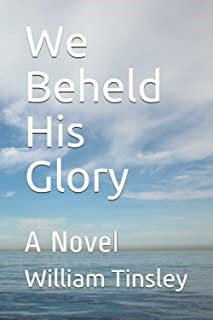
What Others Say

Bill, I have for years read your column and I am always impressed by your insight, intellect, storytelling, and theological soundness. Your pieces are joy to read and always leave me with thoughts that I reflect upon and recall later with gratefulness. -Bradley Toben, Dean Emeritus, Baylor School of Law

Monday, July 13, 2026

Cornerstone Marriage

 Fifty-eight years ago, I asked an 18-year-old college sophomore to marry me. I was 21,  a college senior making $240 per month.  She said yes. We were in heaven.  Could not have been happier.  It was what experts now call a “cornerstone” marriage.  Our marriage to one another was the cornerstone upon which everything else has been built.

 We had no idea how we would make ends meet.  We could not predict our future.  I worked for $1.25 per hour, the minimum wage of that day,  trimming grass by hand, drove a van for Lighthouse for the Blind, worked in a factory and was pastor of a small church.  She worked in the library.   Somehow, we stayed in school and earned graduate degrees.   God was faithful, generous and kind.   

 Over the years we had three children, and raised them.  The first was born 5 years into our marriage.  The last was born the year I turned 40.  She is now 40.  Our children are now raising our 6 grandchildren, the oldest are finding their way like all young adults must do. 

 Sociologists are telling us that marriage for the younger generation has changed.  Instead of a “cornerstone,” marriage is often considered a “capstone,” the final step after all the preliminary problems have been solved: education, money, housing, cars, savings, financial security. As a result many young couples live together for many years before finally deciding they will “cap it off” with vows of marriage.

 I have to admit this confuses me. It seems to me that marriage is designed to help us form a problem-solving relationship.  The traditional vows, “for better or worse” have meaning.  We don’t know what life will bring.  Sometimes it is better.  Sometimes it is worse.  But marriage is a foundational relationship to celebrate successes and to endure challenges. Of course, some marriages fail. The cornerstone cracks.  The foundation crumbles. Sometimes the entire house falls.

 There is one cornerstone that will never fail. Isaiah wrote, “Therefore thus says the Lord God: “Behold, I lay in Zion a stone for a foundation, A tried stone, a precious cornerstone, a sure foundation, (Isaiah 28:16).  And Peter writes, “Therefore it is also contained in the Scripture, “Behold, I lay in Zion a chief cornerstone, elect, precious, and he who believes on Him will by no means be put to shame.” (1 Peter 2:5-6).  Jesus Christ is the chief cornerstone for life and marriage.

Tuesday, July 7, 2026

When We Die

 I took off my gloves the other day and laid them on the kitchen cabinet.  I had been outside watching working in the yard.  I have had these gloves a long time, several years.

 When I went back to put them on again, I saw them lying there, limp and useless.  They still held the form of my hands, the fingers slightly curved. The thumb in place to grasp something, but they were empty, wrinkled, worn with use and smudged with dirt.

  My gloves reminded me of my body.  The day will come when I will put off this body that has served me for almost eight decades.  Like my gloves, my body was once young and new, without wrinkle, elastic, unscarred.  But over the years it has grown old.  My body groans when it moves, becomes stiff when I sit in one position too long.  It aches. Putting on my socks has become an exercise in calisthenics.

 When I die, I will put off this body like I pull off my gloves when I come in from the yard.  It will still hold something of my shape.  But it will no longer be me, any more than my gloves are me.  When my hand occupies my glove, it can move and grasp things. The glove is filled with my life.  Likewise, my body is filled with me while I still live.  But, someday, I will lay it down. 

 According to Scripture, I will eventually put on a new body, just as I can place my hands in a new pair of gloves.  The Bible has a lot to say about this, especially in 1 Corinthians 15. “It is sown [a perishable body, it is raised an imperishable body; it is sown in dishonor, it is raised in glory; it is sown in weakness, it is raised in power;  it is sown a natural body, it is raised a spiritual body.” 

 When my mother was dying, we talked about heaven.  She was 89 years old.  Her body had withered away.  Her back was bowed with osteoporosis.  Her vision was failing.  She had suffered a series of mini-strokes.  She had difficulty walking.  When she was a young girl she was athletic, a beautiful fast runner. She won ribbons in track.  We talked about how she would run again, the wind in her hair, flying through the meadow as she did when she was growing up on the farm.

 There’s a lot I don’t know about Heaven.  What kind of bodies will we have when we get there?  Will our heavenly bodies resemble our earthly bodies?  Will we have different ethnicities, different skin color and racial features?  Will we all look the same?   Maybe we will know each other in a different way, more spiritual and intuitive than visual.  From what I know of God in this world, I would have to assume there will be variety … lots of variety … even more than we see on earth. But all prejudice and pride will vanish. 

 1 John 1:3-2 states, “Beloved, now we are children of God, and it has not appeared as yet what we will be. We know that when He appears, we will be like Him, because we will see Him just as He is.”

Bill Tinsley's book, Sunrise Sunset Poems is FREE as an eBook on Amazon July 7-10.  His poems won first place in the Colorado Open Poetry Contest and the Mississippi Valley Poetry Contest.