What Others Say

Bill, I have for years read your column and I am always impressed by your insight, intellect, storytelling, and theological soundness. Your pieces are joy to read and always leave me with thoughts that I reflect upon and recall later with gratefulness. -Bradley Toben, Dean Emeritus, Baylor School of Law

Tuesday, July 7, 2026

When We Die

 I took off my gloves the other day and laid them on the kitchen cabinet.  I had been outside watching working in the yard.  I have had these gloves a long time, several years.

 When I went back to put them on again, I saw them lying there, limp and useless.  They still held the form of my hands, the fingers slightly curved. The thumb in place to grasp something, but they were empty, wrinkled, worn with use and smudged with dirt.

  My gloves reminded me of my body.  The day will come when I will put off this body that has served me for almost eight decades.  Like my gloves, my body was once young and new, without wrinkle, elastic, unscarred.  But over the years it has grown old.  My body groans when it moves, becomes stiff when I sit in one position too long.  It aches. Putting on my socks has become an exercise in calisthenics.

 When I die, I will put off this body like I pull off my gloves when I come in from the yard.  It will still hold something of my shape.  But it will no longer be me, any more than my gloves are me.  When my hand occupies my glove, it can move and grasp things. The glove is filled with my life.  Likewise, my body is filled with me while I still live.  But, someday, I will lay it down. 

 According to Scripture, I will eventually put on a new body, just as I can place my hands in a new pair of gloves.  The Bible has a lot to say about this, especially in 1 Corinthians 15. “It is sown [a perishable body, it is raised an imperishable body; it is sown in dishonor, it is raised in glory; it is sown in weakness, it is raised in power;  it is sown a natural body, it is raised a spiritual body.” 

 When my mother was dying, we talked about heaven.  She was 89 years old.  Her body had withered away.  Her back was bowed with osteoporosis.  Her vision was failing.  She had suffered a series of mini-strokes.  She had difficulty walking.  When she was a young girl she was athletic, a beautiful fast runner. She won ribbons in track.  We talked about how she would run again, the wind in her hair, flying through the meadow as she did when she was growing up on the farm.

 There’s a lot I don’t know about Heaven.  What kind of bodies will we have when we get there?  Will our heavenly bodies resemble our earthly bodies?  Will we have different ethnicities, different skin color and racial features?  Will we all look the same?   Maybe we will know each other in a different way, more spiritual and intuitive than visual.  From what I know of God in this world, I would have to assume there will be variety … lots of variety … even more than we see on earth. But all prejudice and pride will vanish. 

 1 John 1:3-2 states, “Beloved, now we are children of God, and it has not appeared as yet what we will be. We know that when He appears, we will be like Him, because we will see Him just as He is.”

Bill Tinsley's book, Sunrise Sunset Poems is FREE as an eBook on Amazon July 7-10.  His poems won first place in the Colorado Open Poetry Contest and the Mississippi Valley Poetry Contest. 

Tuesday, June 30, 2026

Two Hundred Fiftieth

 This week we celebrate the 250th anniversary of the Declaration of Independence.  Only a little more than three of my lifetimes have passed since the signing! Thomas Jefferson drafted the Declaration.  John Adams and Benjamin Franklin helped edit it. Adams and Jefferson died on its fiftieth anniversary, July 4, 1826.

 At the signing, John Adams envisioned celebrations in every city with parades, fireworks and political speeches “from one end of this continent to the other.”  Two and one-half centuries later, Adams’s dream is a reality.  This week skyrockets and exploding bombs  will illuminate the night skies over cities, parks, and lakes.  Bands will march in the streets followed by decorated floats and mounted horses.  Politicians will address crowds from platforms decorated with red, white, and blue bunting.

 The Declaration of Independence provides the focus for our American ideals: “We hold these truths to be self evident, that all men are created equal, that they are endowed by their creator with certain inalienable rights, that among these are life, liberty and the pursuit of happiness.”  When the Declaration was signed our nation was far from the ideals it embraced. Slavery was widespread. Most states limited voting rights to white men who owned land.  Two and a half centuries later we have made progress, but the struggle continues to implement the ideals of equality.

 Robert Kaplan’s Empire Wilderness sought a re-examination of America in 1998.  Visiting a Mexican church in Tucson, Kaplan wrote, “The church conjured up tradition, sensuality, nostalgia.  If only this church were more relevant to the social forces roiling the southern half of Tucson.”  In The Next One Hundred Million, Joel Kotkin painted an optimistic future for America in 2050 based largely on our unique faith. He wrote, “a ‘spiritual’ tradition that extends beyond regular church attendance … persists as a vital force.” 

 We strive toward equality because that is the way God made us.  We are each made in His image and “endowed” with infinite worth. We best achieve equality when we seek to defend and achieve the rights of others.  Jesus taught us to “love our neighbor as ourselves,” to “do unto others as we would have them do unto us,” that we are greatest when we are servant to others and that service to God is measured by our actions toward the “least of these.” 

 The pursuit of happiness can degenerate into the self-absorbed and destructive pursuit of pleasure.  Without faith in Christ, we are prone to become captive to addictions and sins that easily beset us.  Jesus said, “Everyone who commits sin is the slave of sin … if the Son makes you free you shall be free indeed.” (John 8:34-36).  Freedom comes when God sets us free from greed, corruption, lust and addiction.  Real freedom is won when we seek welfare and opportunity for others, especially for those who are not like us.

Tuesday, June 23, 2026

How Is Your Soul?

 References to the soul seem strangely absent in our churches. But if the churches have stopped talking about the soul, the technological gurus who design apps for our iPhones have not. 

 A few years ago the Huffington Post launched an app called “GPS for the soul.”  The app is based on two truths that say, “that we all have within us a centered place of harmony and balance, and that we all veer from that place again and again. “ Arianna Huffington stated, “There’s a snake lurking in this cyber-Garden of Eden. Our 24/7 connection to the digital world often disconnects us from the real world around us -- from our physical surroundings, from our loved ones, and especially from ourselves. We see the effects of this in every aspect of our lives.”

 The Bible speaks a great deal about the soul.  The soul can be deeply troubled.  David cried out, “My soul is in deep anguish.  How long, Lord, how long?” (Ps. 6:3) and again, “I will be glad and rejoice in your love, for you saw my affliction and knew the anguish of my soul.” (Ps. 31:7). 

 Our soul can rejoice. “Then my soul will rejoice in the Lord and delight in his salvation.” (Ps. 35:9).  Our soul can be refreshed, “He refreshes my soul.” (Ps 23:3) and our soul can be at peace. “Truly my soul finds rest in God; my salvation comes from him.” (Ps. 62:1).

 Jesus taught that there is nothing in this world more important than the condition of your soul.  “What good will it be for someone to gain the whole world, yet forfeit their soul? Or what can anyone give in exchange for their soul?” (Mt. 16:26). And again, “Do not be afraid of those who kill the body but cannot kill the soul. Rather, be afraid of the One who can destroy both soul and body in hell.” (Mt. 10:28). “Take my yoke upon you and learn from me, for I am gentle and humble in heart, and you will find rest for your souls.” (Mt. 11:29).

 John Ortberg, in his book, Soul Keeping, writes, “We live in a world that teaches us to be more concerned with the condition of our cars, or our careers, or our portfolios than the condition of our souls. … What if I don’t get a promotion, or my boss doesn’t like me, or I have financial problems, or I have a bad hair day? Yes, these may cause disappointment, but do they have any power over my soul?  Can they nudge my soul from its center, which is the very heart of God?  When you think about it that way, you realize that external circumstances cannot keep you from being with God.”

 What is truly important is not our possessions. Neither is it our physical strength or beauty. Nor is it positions of influence, power or fame.  What is truly important is our soul, the essence of who we are. Although our bodies may wither with old age and disease, our souls can continue to grow in grace as we experience God’s love while loving others.

Tuesday, June 16, 2026

Father of Lights

 Few stories are better known than the Prodigal Son.  Jesus first told it in response to those who criticized him for associating with known sinners. For 2,000 years the story has been repeated: a young man impatiently asks for his inheritance from his father. And, once granted, leaves home in search of adventure, finding it in a “far country.”  For a time, he is surrounded by new friends. As long as the money lasts. Once he has gambled and partied away all of his wealth, he is left penniless, destitute and friendless.  The only job he can find is tending swine in a pigsty.  He is so hungry he considers eating the food he feeds the swine.

 Out of desperation he decides to return home, ashamed, hoping to find a job on his father’s farm. To his surprise his father embraces him, replaces his rags with clean clothes and orders a welcoming feast.  He is stunned.

 The central figure in this story is not the prodigal. The central figure is the father.

The father, out of his generosity, gives his young son his inheritance.  It is the father who also gives him his freedom.  He can choose to go where he wishes and do whatever he desires with the inheritance.  It is the father, who sees his son in the distance, clothed in rags, shoulders slumped, depressed and defeated.  He does not stay where he is, waiting for his son to drag himself to him. He runs, as quickly as his aging feet will carry him, and throws his arms around his son, welcoming him with joy and tears.  He does not require penance.  He does not make him grovel for acceptance.  Instead, he orders a feast of celebration.

 Jesus told this story, not to help us see what we are like. We are, for the most part only too aware that we are sinners.  We have often failed and made mistakes.  He told this story to help us know what God is like.  He is our father!

 Jesus said, “ Or what man is there among you who, if his son asks for bread, will give him a stone?  Or if he asks for a fish, will he give him a serpent?  If you then, being evil, know how to give good gifts to your children, how much more will your Father who is in heaven give good things to those who ask Him!” (Matthew 7:9-11).

 This changes everything.  The Creator and Sustainer, the Master Designer, the Ground of All Being is for us.  God is our Father.  As we gather this weekend to celebrate fathers, let us celebrate the Father of Lights, our Father who is in Heaven who loves us and gave His Son that we might have life.

Tuesday, June 9, 2026

Bread of Life

 Bread has become a delicacy.  When my wife sends me to the store for a loaf of bread I stand dumbfounded in front of the shelves.  Which bread to buy?  There’s white bread, whole wheat bread, gluten free 7 grain bread, garlic bread, rye bread, and a dozen others.  Then there are bagels: plain bagels, blueberry bagels and everything bagels.  And what about donuts?  I think donuts are included in the bread family.  Okay, I choose donuts.

 From ancient times “bread” has represented the staple of life.  Even today, in all its various forms, bread is still the most widely consumed food in the world.

 Scholars have found evidence that people started baking bread 30,000 year ago. But the first breads were “flat.”  They lacked leaven. It is the leaven that makes it rise, light and fluffy and sweet. Historians believe that the Egyptians were the first to develop leavened bread, somewhere around 1000 years before the great pyramids were built.  The most famous “unleavened” bread was the Passover bread, cooked up in a hurry by the Israelites to escape Egypt. 

 In 1917 Otto Rohwedder invented the first bread-slicing machine. He set the standard for all other inventors who searched for an idea that would be “better than sliced bread.”  In spite of Rohwedder’s invention, there is nothing quite like pulling apart a fresh steaming loaf of bread and adding butter.  

 Jesus referred to bread to help us understand who He was.  “I am the bread of life; he who comes to me will not hunger, and he who believes in me will never thirst.” John 6:35).  “Man shall not live by bread alone, but by every word that proceeds from the mouth of God, ” (Deut. 8:3; Mat. 4:4).  God nourishes our soul and satisfies our innermost emotional, personal and spiritual needs, a nourishment more important than the nourishment of our bodies.

 Jesus taught us to pray, “Give us this day our daily bread.” Just as God provides for us daily the nourishment that is necessary for our bodies, He will provide for us each and every day the nourishment that is necessary to replenish our soul. 

 When Moses led Israel in the wilderness, God provided bread every morning so that “he who gathered much had no excess and he who gathered little had no lack.”(Exodus 16:18).  They could not store and keep the bread. It had to be eaten when God gave it.

 Like the Israelites in the wilderness, our relationship with God is daily and constant.  We cannot put our faith in a religious box to be taken out occasionally.  Just as our bodies need bread in order to live, our souls need a daily and constant conversation with God, the bread and substance of life.

Tuesday, June 2, 2026

The Anxious Generation

 A couple weeks ago my 15-year-old granddaughter suggested I read Jonathan Haidt’s The Anxious Generation.  I was stunned.  Over my lifetime I have experienced several technological revolutions that have transformed the way we live: color TV, the personal computer, internet, email,  mobile phones, smart phones.  In every case I was an early adopter. But I missed the rapid and ubiquitous spread of social media.                                      

According to Haidt, a recognized social psychologist, Gen Z, those born between 1995 – 2010, is the first “phone-based” generation to experience a “rewiring” of the brain through social media.  A professor of psychology at NYU’s Stern School of Business, he says, “I have seen the rising levels of anxiety and device addiction as my students have changed from millennials using flip phones to Gen Z using smartphones.” Access to social media coupled with adolescent mental, social and psychological development has been devastating.

 Haidt writes, “Children born in the late 1990’s were the first generation in history who went through puberty in the virtual world.  It’s as though we sent Gen Z to grow up on Mars when we gave them smartphones in the early 2010’s.” Since the introduction of smartphones and social media, Haidt documents a 145% rise in depression among teenage girls since 2010, and a 161% increase among boys. Along with this, Emergency Room visits related to self-harm increased 188% among girls and 48% among boys since 2010. This is recent and rapid. 

Interestingly, Haidt, who claims to be atheist, finds promising solutions in spiritual terms. He draws on a book by David Steno, a social psychologist, published in 2021, How God Works: The Science Behind the Benefits of Religion.  He names six practices that can help all of us in our age of anxiety and fragmentation: shared sacredness, embodiment (rituals), stillness-silence and focus (meditation), transcending the self (inspiration), being slow to anger and quick to forgive, and experiencing awe. He leaves out faith however, the key element that makes all of these work.

 These healthy elements are found in the life and teachings of Jesus. He emphasized the importance of community.  “Where two are three are gathered together in my name, there I am, in the midst of them.”  He established the Lord’s Supper when He shared bread and wine with his disciples the night before His death saying, “this do in remembrance of me.” He taught us to transcend self, “If anyone desires to be first he shall be last of all and servant of all,” (Matthew 9:35).   Regarding anger and forgiveness, He said, “You have heard it said, ‘You shall not murder,’ but I say to you he who is angry with his brother without cause is in danger of the judgement.”  “If you do not forgive men their trespasses, neither will your Father forgive your trespasses,” (Matthew 6:15). As to awe, John wrote, “We beheld His glory, as of the only begotten of the Father, full of grace and truth,” John 1:14).

 I am encouraged by reports that many in Gen Z are turning to faith.  The magazine Relevant describes it: “This isn’t the next wave of megachurch Christianity or the rebranded youth group hype of the early 2000s. There are no flashy social media campaigns, no celebrity pastors, no big marketing push. What’s happening is quieter, rawer and—to the surprise of many—far more compelling. Gen Z isn’t leaving faith behind. They’re leading a revolution.” We can pray that the entire world may be revolutionized by faith that is found in Jesus Christ.

Bill Tinsley's Sermon on the Mount Devotional Book is FREE as an eBook on Amazon June 2-4. 

Tuesday, May 26, 2026

Dealing With Rejection

 Everyone has felt rejection.  For many it is first encountered on the playground.  Children choosing their friends or choosing teams until one remains, unchosen, unwanted, rejected.  We discover life can be like musical chairs.  When the music stops there is no place to sit.  All the included places are taken.

 Sometimes it comes with our first applications for college. For a few, colleges and universities line up with scholarships and offers, but most must deal with rejection.  Most of us have known the uncertainty of a job search.  The series of rejections from interviews can be devastating to our ego.  Forced into a situation where self-confidence is essential, we become anything but.

 Door-to-door salesmen are familiar with rejection.  It is part of the job.  So are politicians and would be writers.  How many ways can we be turned down and rejected?

 Perhaps most devastating of all is a rejection by those who are close to us.  The rejection of a mother or father, son or daughter, or spouse. These can cause wounds that last a lifetime.

 It might help to realize we have company. When we are rejected we are not alone.

 When Herman Melville wrote Moby Dick, his work was turned down by multiple publishers. It was finally accepted by Bently & Son who asked, “Does it have to be a whale?”  Nevertheless they published the classic on the condition that Melville pay for the typesetting and plating himself.  When 25-year-old Hemmingway wrote The Son also Rises one publisher responded, “I find your work both tedious and offensive.” 

 Joseph was rejected by his brothers and sold into slavery in Egypt. Paul was rejected often, stoned and left for dead, driven from city to city and imprisoned.  Jesus’ own brothers refused to believe in Him and  His closest disciples abandoned Him.  He was “despised and rejected, a man of sorrows and acquainted with grief.” (Isaiah 53:3).

 But, when we experience rejection by family, friend or the world, we can rest knowing that there is One who will not abandon us.  “Can a woman forget her nursing child, and have no compassion on the son of her womb? Even these may forget, but I will not forget you.  Behold I have inscribed you on the palms of my hands.” (Isaiah 49:15-16).

 Jesus constantly included those who were rejected:  the Samaritan woman, Zacchaeus, the blind beggar, the woman caught in the act of adultery, lepers and the Gadarene demoniac.  Though others might reject you, Jesus will by no means turn you away.  If we come to Him in simple faith and confession, He will receive us.

 We can say with the Apostle Paul, “Having predestinated us unto the adoption of children by Jesus Christ to himself, according to the good pleasure of his will, to the praise of the glory of his grace, wherein he hath made us accepted in the beloved,”   (Ephesians 1:5-6).

Bill Tinsley's book of poems, People Places and Things is Free as an eBook on Amazon May 26-29.  His poetry has won first place honors in the Colorado Open Poetry Contest and the Mississippi Valley poetry contes. 


Tuesday, May 19, 2026

Authenticity

 I stepped up to the counter and handed the cashier my twenty-dollar bill.  Paying with cash today is rare, but I thought I would try it.  I think the people standing behind me rolled their eyes. The cashier glanced at me, lifted the bill up to the light, squinted and examined it, then laid it on the counter. She whipped out what looked like a felt tip marker and marked it. After a long second, she placed it in the cash register and gave me my change.  It seemed simple enough. But it made me wonder. 

 What made her think my twenty might be fake?  Did I look dishonest? I reminded myself that it was standard procedure.  She had been taught to check every twenty because you never know who might pass a counterfeit.  You can’t recognize honesty or dishonesty by a person’s looks.

 Wouldn’t it be nice if it was just as easy to discern fake people as it is to recognize a fake twenty?  What if we could hold people up to a light, squint and examine them for watermarks, or just swipe them with a pen and watch for discoloration?

 Unfortunately, it isn’t that simple.

 Sometimes the people we trust the most disappoint us. That was the case with Richard Nixon. After winning the presidency by a landslide vote, the Watergate investigations revealed a man far different than the public image. One of our great difficulties today is the widespread doubt that no politician can be trusted. They seem more intent on vilifying their opponents and promoting their own agenda than engaging in sincere dialogue.

 We all know that no one is perfect.  We are all human.  We are all sinners and we all make mistakes. We are not looking for perfection.  But we are desperate for authenticity. We are desperate for authentic parents, teachers, employers, employees, preachers and politicians.

 Jesus ranked authenticity among the highest of virtues. His harshest words were leveled at those who pretended to be what they were not. Speaking to people of his day, Jesus said, “You're like manicured grave plots, grass clipped and the flowers bright, but six feet down it's all rotting bones and worm-eaten flesh. People look at you and think you're saints, but beneath the skin you're total frauds.” (Mt. 23:27-28, The Message).  He warned his disciples, “Beware of the leaven of the Pharisees, which is hypocrisy.” (Luke 12:1).

 What really gets scary and complicated is to examine ourselves. Am I authentic?  Is there any hypocrisy in me?  Are we being open, honest and authentic with one another? Someday, of course, there will be a test. God will hold each of us up to the light. He will examine us for authenticity. Are we people of authentic faith living authentic lives?

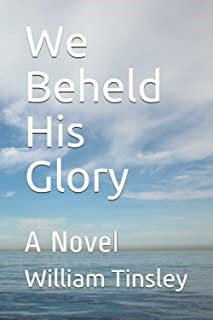
Tinsley's book, We Beheld His Glory, A Novel, is FREE as a eBook on Amazon May 19-21. 

Tuesday, May 12, 2026

Why Go To Church

 Given the secular focus of our culture with sports dominating Sundays, it is easy to conclude that very few people still attend church. But, according to the best research, that is just not the case.  More people attend church than we might think. 

 Estimates of church attendance on a given Sunday vary.  According to Gallup 30% of Americans attend  churches weekly or almost ever week.   The Pew research estimates 33% attend at least once a month and 25% at least once a week. Pew also mentions that the long-term decline in church attendance has slowed or stopped.  62% of Americans identify as Christians. The Barna Group notes that Gen Z and Millennials are driving a resurgence in church attendance.  

 This, it seems to me, is remarkable.  What other voluntary activity could attract this many people on a regular basis?  According to the most conservative estimates, between 50 million and 85 million people attend church every week.  By comparison, the average attendance per week to all MLB games combined totals less than 500,000.  Although the percentage of those attending church has declined over the years, church attendance is still a huge part of our lives. 

 As I have thought about it, I have asked myself the question, “Why do I go to church?”


I go to church because, down deep, I believe in Jesus.  I think it is what He would want me to do.  Even though the Jewish authorities turned against Him, it was Jesus’ custom to attend the synagogues.  (Luke 4:16).  And even though churches are seldom what they ought to be, I need to follow Jesus’ example.

 I go because I need to be encouraged in my faith and I want to encourage others.  While I have been disappointed by some pastors and church leaders over the years, I find that going to church lifts my spirits.  Other believers take an interest in me and pray for me.  And I seek to do the same for them. (1 Thessalonians 5:11; Hebrews 3:13; 10:25).

 I go to church because churches make the world a better place. All churches, as we know, are flawed. Someone once asked me if I knew of any churches that did not have any problems.  I asked if he knew of churches that didn’t have any people.  Where there are people, there will be problems. But most churches seek ways to feed the hungry, help the poor, comfort the grieving and care for the aging.  Churches pull us outside ourselves and call us to a higher and better world.

 I go because I want my children to go.  Even though my children are grown and gone, I still want to be an example to them, as I sought to be when I was raising them.  Going to church is a discipline. Sometimes I don’t feel like it. But I have learned over the years that the best things in life require effort.  Worship, Christian fellowship and service are disciplines that I believe are worth passing on to the next generation.  

 I am sure there are many other reasons why people attend church.  There are other reasons why I do as well, but these are the ones that stand out the most in my mind.

 If you haven’t been attending church.  I hope you will do so this week. 

Monday, May 4, 2026

Mother's Day

This week husbands, sons and daughters will elbow their way to the greeting card displays in search of the perfect card to celebrate Mother’s Day.  Florists will put on extra staff to handle the demand. Restaurants brace for business.

 Countries around the world set aside a special day for mothers. It is celebrated on the second Sunday in May in the U.S. Canada, New Zealand, Australia, India, Brazil, Germany, Ethiopia and the Philippines. Woodrow Wilson proclaimed Mother’s Day an official holiday starting on May 8, 1914. Still other nations honor mothers on different dates.

 Regardless of our nationality, ethnicity or gender, we were each carried in our mother’s womb, given birth through her labor and, in almost all cases, nursed and nourished to life by her care.  

 No office and no position wields greater power and influence over the future of humanity than the influence of a mother.  The memories and lessons given in infancy at a mother’s hand surpass every other classroom and instruction.  The faith of a mother inspires and instructs more effectively than any pulpit or pen.We see it in history, and we see it in the Bible.

 In a log cabin in Kentucky, Nancy Hanks Lincoln recognized the early gifts in her child.  She not only taught him to read, but instructed him in the principles that would shape his life.  Without Nancy, and Sarah, who became Lincoln’s step mother after Nancy died, it is unlikely that Abraham Lincoln would have ever surfaced to lead our nation in its greatest hour of crisis.

 If it were not for Moses’ mother, the world would have never known the great law-giver who led Israel from captivity and gave us the Ten Commandments.  It was she who hid him in the reeds at the river to save his infant life and it was she who cared for him in Pharaoh’s court. 

 How many mothers have petitioned God for the birth of a child, as Hannah prayed in the presence of Eli, the prophet?  Without her prayer, Samuel would not have been born, and would not have been present to anoint David, the king of Israel.

 In the fullness of time, in an obscure Galilean village, another young woman lifted up her eyes to heaven and sang, “My soul exalts the Lord, and my spirit has rejoiced in God my Savior. For He has had regard for the humble state of His handmaiden; for behold, from this time on all generations will count me blessed. For He that is mighty has done to me great things, and holy is His name.” (Luke 1:46-49).  Without Mary we would never have known Jesus, and the world would remain lost in its sins without a Savior.

 Paul referred to the importance of a mother’s faith when he wrote to his young protégé, Timothy: “For I am mindful of the sincere faith within you, which first dwelt in your grandmother Lois and your mother Eunice, and I am sure that it is in you as well.”  (2 Timothy 1:5). 

 This Mother’s Day we honor all mothers who have shaped us and made a better world

Tuesday, April 28, 2026

Are You Forgiven? Do You Forgive?

 After 2,000 years science and psychology are finally catching up with the teachings of Jesus.  A recent article in the Washington Post reported that psychologists are discovering the power of forgiveness for health and well-being.  “A new analysis spanning more than 200,000 people across 23 countries and published in NPJ Mental Health Research, a Nature publication, found that forgiveness may be more than a moral ideal. It appears to function as a psychological ideal as well, across cultures.”[i]

 The article went on to say, “Scientists call this dispositional forgiveness, and the idea marks a growing shift in the field that researchers believe has the potential to reshape not only our family and romantic relationships, but also our workplaces — and even geopolitical dynamics. … what happens when forgiveness becomes an ordinary, practiced way of moving through the world.”

 Forgiveness is a major theme in Jesus’ teaching.  He taught us to pray, “Forgive us our debts as we forgive our debtors.”  He concluded the model prayer by saying, “For if you forgive other people for their offenses, your heavenly Father will also forgive you. But if you do not forgive other people, then your Father will not forgive your offenses,” (Matthew 6:12, 14-15).

 Peter might have felt proud of himself when he asked Jesus, “Lord, how often shall my brother sin against me and I forgive him? Up to seven times?”  Jesus’ response must have shocked him, “I do not say to you forgive up to seven times, but up to seventy times seven,” (Matthew 18:21-23 KJV).

 Following Peter’s question, Jesus told a story about a man who was deep in debt.  His master was going to have him sold, along with his wife and children to settle the debt.  He begged for mercy and his master forgave the debt entirely.  That same man found another who owed him a paltry sum. Instead of forgiving, as he had been forgiven, he attacked his debtor and had him thrown into prison.  When the master who forgave him found out, he said, “‘You wicked servant! I forgave you all that debt because you begged me. Should you not also have had compassion on your fellow servant, just as I had pity on you?’  And his master was angry, and delivered him to the torturers until he should pay all that was due to him. So My heavenly Father also will do to you if each of you, from his heart, does not forgive his brother his trespasses,” (Matthew 18:23-35).

 From the Cross Jesus cried out, “Father forgive them for they know not what they do.” He gave His life that our sins might be forgiven. “If we confess our sins, He is faithful and just to forgive us our sins,” (1 John 1:9).   We who have been forgiven must forgive others. Forgiveness is essential to all human relationships as well as our relationship to the Father.

 My wife and I have been married 57 years.  When people ask her the secret to a long marriage, she always quotes Ruth Bell Graham and says, “Two good forgivers.”


[i] Washington Post, April 23, 2026


Monday, April 20, 2026

When God Calls Your Name

 For 14 years we were the owners of a tri-color Pembroke Corgi named Buddy.  We adopted him from Corgi Rescue, a stray picked up on the streets.  They told us his name was Tex.  But, when we got home, he told us his name was Buddy. His story is available on Amazon, Buddy The Floppy Ear Corgi, “just the way he told it to me.”  Unfortunately dogs don’t live as long as we do and we had to “lay him down” a few years ago.

 He knew his name. Whatever he was doing, whether napping (one of his favorite pass times) or checking out “pee mail” on a bush.  When I called his name his head jerked up with ears alert and he came.  

 Sometimes he came when I first called him, running at top speed, which was not all that fast.  Sometimes he loitered around, distracted by new smells and sounds. So I called him again.  Occasionally I had to clap my hands.  Sometimes he came at a very slow walk, grudgingly. But he eventually came when I called.

 It seems to me that I am a lot like that with God.  There are times when I sense God’s call, and I come running. But there are other times when I am distracted by other interests, worries and concerns.  I don’t listen for his voice as I should, and I don’t come as quickly as I should.  Sometimes I come grudgingly.

 When I was a child my parents took me to church.  At the end of every service the church offered an “invitation.”   We all stood and sang a song while the preacher waited at the front to talk with anyone who wanted to make a decision for Christ.  Sometimes we sang an old hymn.

 Softly and tenderly Jesus is calling

Calling for you and for me

Patiently Jesus is waiting and watching

Watching for you and for me.


Come home.  Come home.

You who are weary come home.

Earnestly and tenderly Jesus is calling,

Calling, O sinner, come home!

 One day, I let go of the pew in front of me and went forward.  Those first few steps made all the difference. When He called, I came.  Ever since that day, I have been listening for His voice. I have never heard God speak audibly, though I do not doubt God can speak audibly to whomever He chooses. For me, it is an inner voice.  Sometimes His voice acts like a compass, pointing the way forward.

  Even when we wander away, drawn away by smells and sounds of the world, He is always calling, waiting and watching for us to come home to God.

 Jesus said, “The one who enters by the gate is the shepherd of the sheep. The gatekeeper opens the gate for him, and the sheep listen to his voice. He calls his own sheep by name and leads them out. … I am the good shepherd; I know my sheep and my sheep know me—just as the Father knows me and I know the Father—and I lay down my life for the sheep.”     (John 10:2-3, 14-15).

 In Psalms the Bible says, “He heals the broken hearted and binds up their wounds. He determines the number of the stars and calls them each by name.”  (Psalm 147:3-4).  God knows your name. He knows mine.  If we listen, we can hear him calling.

Tuesday, April 14, 2026

Earth Lessons From Space

 Last Friday, April 10, Artemis 2 safely returned to earth. Their 10-day voyage took them deeper into space than any human has traveled, and, like others before left them spellbound by the sight of our fragile planet. Astronaut Christina Koch described her experience viewing earth from afar: “I found myself noticing not only the beauty of the Earth, but how much blackness there was around it … It truly emphasized how alike we are, how the same thing keeps every single person on planet Earth alive, …  we have some shared things about how we love and live that are just universal.”

 The war with Iran was launched the day before Artemis 2 lifted off. It quickly escalated to threats of annihilation, nuclear and counter nuclear threats from Israel, China and Pakistan, global economic inflation.

 Our first landing on the moon in 1969 was likewise a turbulent time. Martin Luther King, Jr. and Bobby Kennedy had been gunned down the year before. Vietnam was at its height. 11,616 American GIs died in Vietnam in 1969. Protests were spreading across the country. Four unarmed students were killed by the National Guard at Kent State in 1970.  We were 4 years away from the oil embargo that quadrupled the price of gas and 5 years away from Watergate.

In the midst of the chaos, we left a human footprint on the moon. 


For most of my life that moment has remained a symbol of the indomitable human spirit, our aspiration and determination to do the impossible, to literally reach for the stars. Most of us assumed that we would return. It seemed entirely plausible that we would have a base on the moon by the end of the century.  But, 50 years later, the Apollo footprints remain undisturbed.

 Many of us felt humbled in the face of our fragile yet beautiful existence.  The astronauts not only taught us courage and discipline, they inspired us with awe and faith. John Glenn was the first American to orbit the earth. When asked about his experience, Glenn said, “To look at this kind of creation out here and not to believe in God to me is impossible.”

 On Christmas Eve, 1968, with the desolate lunar landscape beneath and the earth rising like a marvelous marble of life on the lunar horizon, Frank Borman, James Lovell and William Anders took turns reading the Genesis account of creation. (Genesis 1:1-10).  Prior to exiting the lunar lander 18 months later, Armstrong and Aldrin paused while Buzz Aldrin, an elder in the Presbyterian Church, took communion and prayed. 

 Thomas Friedman includes an account about Neil Armstrong’s visit to Jerusalem years later.  According to Friedman, when Armstrong visited the Temple in Jerusalem in 2007 he asked his guide if these were the very steps where Jesus stepped.  When his guide confirmed they were, Armstrong reportedly said, “I have to tell you, I am more excited stepping on these steps than I was stepping on the moon.”

 Half a century after the Apollo 11 landing, we can appreciate even more the words of David, “When I consider the heavens, the work of your fingers, the moon and the stars, which you have ordained; what is man that you take thought of him, and the son of man, that you care for him? Yet you have made him a little lower than God, and you crown him with glory and majesty!  You make him to rule over the works of your hands; you have put all things under his feet” (Psalm 8:3-6). 

Monday, April 6, 2026

When God Seems Far Away

There are times when God seems very near.  We feel his forgiveness, acceptance, comfort and peace.  Our hearts are filled with joy and songs of praise for His goodness and beauty. But what about the times when God seems far away?

King David sometimes felt this way.  Repeatedly he asked, “Why are you in despair, O my soul?  And why have you become disturbed within me?” (Ps 42:5, 11; 42:5).  “O Lord, why do you reject my soul? Why do you hide your face from me?” (Ps 88:14).  After confronting the prophets of Baal, “Elijah was afraid and ran for his life … he went a day’s journey into the wilderness … and prayed that he might die.  ‘I have had enough, Lord,’ he said. ‘Take my life, I am no better than my ancestors.’” (1 Kings 19:3).

 Going through times when we feel God is far away is a normal human experience. The prophets felt it.  God even allowed his own Son to experience it.  When Jesus hung upon the cross He cried out, “My God, My God, why have you forsaken me?” (Matthew 27:46).

 So, when those times come, what are we to do? When we feel God is far away, we are often filled with worry, uncertainty, doubt and despair.  But this will not last.  We will yet feel His presence again and praise Him. Our feeling that God is distant is temporary. This is what sustained King David in his dark times. In every case, he declared, “Hope in God, for I shall again praise Him.”  

 We must rely on God’s promises and not on our feelings. Even when we don’t feel His presence, He is near. Repeatedly God has said, “I will never leave you nor forsake you.” (Deut. 31:6,8; Joshua 1:5; Hebrews 13:5).  Jesus said, “I am with you always, even to the end of the age.” (Matthew 28:20).  David wrote, “Where can I go from Your Spirit? Or where can I flee from Your presence? If I ascend to heaven, You are there; if I make my bed in Sheol, behold, You are there. If I take the wings of the dawn, if I dwell in the remotest part of the sea, even there Your hand will lead me, and Your right hand will lay hold of me. If I say, “Surely the darkness will overwhelm me, and the light around me will be night,” Even the darkness is not dark to You, and the night is as bright as the day.”  (Ps. 139:7-12).                  

We must continue to do everything that is right and good in His sight.  One of Jesus’ favorite parables was the story of a wealthy landowner who left for a long trip.  In his absence, some of his servants decided he wasn’t coming back and began to abuse his property, doing things they knew the landowner would never condone.  But the landowner returned, and when he did, there was a reckoning.  The real evidence of our faith is not what we do when we feel His presence and know He is near. The real evidence of our faith is what we do when we feel God is far away. 

Bill Tinsley's book, The Jesus Encounter is free April 7-10, eBook on Amazon. Stories of people in the Bible who met Jesus.  

Tuesday, March 31, 2026

Friend of Dreams

 Last week I spent 4 days with friends from my childhood. Five of us started elementary school in the same first grade class 73 years ago.  We will soon celebrate our 80th birthdays. The group started meeting annually 20 years ago.  We all went our separate ways after childhood and youth.  We followed different dreams that led down different paths.  Some of our dreams were realized, some were not, and many of our journeys took unforeseen twists and turns. 

 Dreams are common to the young.  The group started when we were all coming to the close of our careers anticipating retirement.  What holds the group together, I think, is not so much the memories that we shared, but the dreams that we encourage each other to dream.  In a way it is a fulfillment of Joel’s prophecy, “It will come about after this That I will pour out My Spirit on all mankind; And your sons and your daughters will prophesy, Your old men will have dreams …” (Joel 2:28). This year I shared a poem with the group that, I hope, captures our experience.

 We flew away to the housetops in our youth,

a view from the precipice,

overlooking those below,

catching glimpses of the rim,

the edge of the beyond,

where we dreamed together,

your dreams and my dreams,

feeding and fueling each other,

till we were carried away

in magical flights where bodies cannot fly

viewing visions we could not see alone,

visions viewed in our burning brains,

leaving behind solid earth,

where we would be held

tethered by the monotony of minds

 conformed to a monochrome

and monotone existence.


We saw colors not seen by human eye,

We heard sounds not heard by human ear,

scenes and sounds springing from our friendship

by which we were inspired and by which we inspired each other.


And then we left.


Years have passed, and we have grown old,

the dark hair on our heads turned gray,

and our shoulders stoop.

Deep furrows form upon our brow

where the cares of solid earth

sliced and scarred our skin.


But in your eye I see a glimmer growing to a gleam,

and in my own a flicker of the flame

as we draw each other to the roof

where once we sat

and we dream again, and we are young

as long as dreams remain

 ... my friend.


Whatever your age, whatever your circumstance, may the Lord give you a dream for tomorrow.

Tuesday, March 24, 2026

American Greed?

 The America I grew up in was seen as the shining light on a hill.  We took pride in the inscription on the Statue of Liberty: "Give me your tired, your poor, your huddled masses yearning to breathe free, the wretched refuse of your teeming shore. Send these, the homeless, tempest-tossed to me, I lift my lamp beside the golden door!"

 Instead of decimating our enemies after World War II, we helped them rebuild.  Germany and Japan embraced freedom and prosperity and became two of our strongest allies.  

 We fought and died in the jungles of Vietnam, not for ourselves, but for others.  In its aftermath we welcomed Vietnamese and Hmong refugees who integrated into our cities.  Christian churches sprang up among various groups: Vietnamese, Chinese, Laotian, Thai, Korean, Liberian, Nigerian and many others.  Spanish speaking churches exploded and continue to thrive.  The Christian faith swept across South Korea until it became the second largest mission sending nation in the world.

 When I visited Brazil I was welcomed as a celebrity because I was an American.  Children ran through the streets and people crowded in the windows to see someone from the United States. When I served briefly as pastor of an English speaking church in Nuremburg Germany older Germans often expressed their gratitude for GIs who helped them rebuild their nation.  We thought of ourselves as a generous and welcoming nation, blessed by God to bless the nations of the world.

 But all of that seems to be changing.  We are well down the road of putting “America first.”  The question is no longer, what is best for mankind, for the world and for posterity, but what is best for us.  The MAGA has transitioned into a “me first” mentality.

 Instead of asking, how can we help out neighbor nations fight the gang violence and corruption that causes families to flee to our borders, we ask only, “how can we keep these people out?”   In our efforts to “make America great again” we seem to be losing the values that made America great in the first place.

 Our movies, our media and our politics portray us as a covetous people.  We seem to have adopted Gordon Gekko’s maxim that “greed is good.”  We have turned a deaf ear to the tenth commandment: “You shall not covet.” (Exodus 20:17).

 The Apostle Paul confessed that this commandment was his undoing. “I would not have known what coveting really was if the law had not said, ‘You shall not covet.’  But sin, seizing the opportunity afforded by the commandment, produced in me every kind of coveting.’” Romans 7:7-8).

 When we start down this self-centered path we sow the seeds of future calamity in our communities, our nation and the world. Paul’s conclusion is applicable for all of us: “The commandments, ‘You shall not commit adultery,” “You shall not murder,” You shall not steal, “You shall not covet,” and whatever other command there may be, are summed up in this one command, ‘You shall love your neighbor as yourself.’” (Romans 13:9).

Monday, March 16, 2026

Who Can You Trust

 There was a day when we felt we could trust those who spoke to us, the Presidents who led us and the journalists who interpreted the news.  We believed Washington “could not tell a lie.”  Lincoln was known for his honesty.  We always knew we could trust Walter Cronkite, whether he was reporting the assassination of JFK or describing the first lunar landing. But those days seem naive and far away. 

 The world has become much more complex.  The truth is far more difficult to discern.  Nixon’s claim that he was no crook and Clinton’s assertion that he “never had sex with that woman,” eroded our trust in the Presidency.  Today we feel caught between “fake news” and “alternate realities.”  Brian Williams and Matt Lauer left us disillusioned with journalists.  We hardly know who to believe.

 Former NY Mayor, Michael Bloomberg, speaking at Rice University’s commencement a few years ago, stated that we are facing “an epidemic of dishonesty … an endless barrage of lies and alternate realities.”  …“ The greatest threat to American democracy isn’t communism, jihadism or any other external force or foreign power,” he said. “It’s our own willingness to tolerate dishonesty in service of party, and in pursuit of power.” 

 NBC News reporter Andrew Rafferty said, “We live in a world where lying has become an art.  Politicians, celebrities, characters on the screen, all lie.  They do so convincingly and without remorse.  And technology has moved prevarication into a whole new realm.  The world where ‘seeing is believing’ has vanished.”

 The ninth commandment is essential to personal, relational and societal health. “You must not lie.” (Exodus 20:16 Living Bible).

 When we ignore God’s instructions on truthfulness and honesty, we sow the seeds of our own misery and destruction. Whether marriage, family, business or politics; in the home, the school, the work place and the world.  

 So, what should we do?  First, we must practice telling the truth to our children, to one another, in business and personal relationships.  Above all, we must be known to be honest. We must not lie.

 Second, we must practice discernment. We cannot believe everything we hear and see at face value, especially social media that has little or no accountability.  “Beloved, do not believe every spirit, but test the spirits to see whether they are from God, because many false prophets have gone out into the world,” (1 John 4:1).   “Do not be deceived,” the Bible says, “God is not mocked. A man reaps what he sows.” (Galatians 6:7). 

 Third, we must place our trust in the One who alone is truthful, honest and above reproach.  We must trust God, confident that He knows our hearts, our secret thoughts and every word we speak.  “Let God be found true, though every man be found a liar.” (Romans 3:4).  Jesus said, “If you continue in my word then you are truly disciples of mine; and you will know the truth and the truth will make you free.” (John 8:31-32).

Tinsley's book, Meditations in The Sermon On The Mount is FREE as an eBook on Amazon March 17-21. 

Tuesday, March 10, 2026

Theft and Things

 An Atlanta businessman boarded MARTA to make his daily commute to work.  He stood in the crowded car scanning the newspaper accounts of crime when he felt a stranger bump him.  He instinctively felt for the wallet in his back pocket and found it missing.  He folded the paper and kept his eye on the stranger who had moved to the opposite side of the car.  When the train stopped and the stranger exited, he followed.  His rage continuing to grow, he grabbed the stranger and threw him up against the wall.  His face crimson with wrath he demanded, “Okay Bub, hand over that wallet.”  The stranger, trembling, did a he was told. Without looking the businessman shoved the wallet into his pocket and stomped off to work.  When he arrived at his office his secretary stopped him.  “You  have a message from your wife. She said you left your wallet on the night stand at home!”

 I suppose all of us have been victims of theft.  Shortly after we married, we drove to Houston to visit my wife’s mother in the hospital.  I left our car parked on the street filled with our clothes on hanging rods. When we returned, the car was empty and we were clothes-less.  Most of us have lost bicycles at college. Some have had home break-ins with far more serious losses. My wallet fell out of my pocket at a theater once.  I found it a few days later, sans cash and credit cards.  Same thing for my laptop, stolen from my car.  The police found the computer bag, but no computer.

 Theft is widespread.   Every day the eighth commandment is broken: “You shall not steal.” (Exodus 20:15).

 The first step in respecting other people is respecting property.  It is one of the first lessons we teach toddlers.  Some toys belong to them. Some toys belong to their friends. It is not an easy lesson for a two-year-old, and some never learn it.

 A 2025 article in USA Today noted that self-checkout theft is on the rise.  In a survey by Lending Tree 27% of respondents confessed to stealing from self-checkout.  Almost half of those admitted they stole grocery items.

 The rich and the well-off are just as guilty as the poor, maybe more so. We only need launch a Google search for a list of celebrities who have been convicted of shoplifting. White collar crime is rampant. The National Retail Federation estimated stores lost $47.8 billion to retail theft in 2025. The Government Accountability Office estimated the government loses as much as $531 billion to fraud annually.

 As always, Jesus raised the commandment to another level.  We have not fulfilled the heart of the commandment when we refuse to take something that does not belong to us.  We fulfill the commandment when we move beyond seeing property and possession as primary.   People are primary. Jesus said, “If anyone wants to sue you and take your shirt, hand over your coat as well … give to the one who asks you, and do not turn away from the one who wants to borrow from you.” (Matthew 5:40-42).  We can keep the eighth commandment and still live a selfish and self-centered life.

 The Bible says, “Give generously and do so without a grudging heart; then, because of this the Lord your God will bless you in all your work and in everything you put your hand to. There will always be poor people in the land.  Therefore I command you to be openhanded.” (Deuteronomy 15:10-11).

Tuesday, March 3, 2026

Exalting Marriage

 Young families embody the hope and dreams of our future.  Few scenes move me as much as young couples strolling through the neighborhood pushing a stroller; fathers splashing in the pool with their children while young mothers lounge in poolside chairs; children laughing in the park flying kites with their fathers, giggling on playgrounds with their mothers.

 It is this special bond that God’s seventh commandment seeks to nourish and protect: “You shall not commit adultery.”   Sex, in all of its beauty and pleasure, was given to men and women to celebrate the mystery by which human life is conceived, cradled and nurtured. According to Merriam-Webster, the strict definition of adultery is “voluntary sexual intercourse between a married person and someone other than that person's spouse.”

 This year my wife and I celebrate our 58th anniversary along with our friends who “pledged their troth” about the same time in 1968.  Marriage is worth holding on to, worth working through the difficulties, worth the investment.  The seventh commandment provides the foundation for trust and a love that lasts. It is the foundation of the family where children are born and nurtured.

 Somewhere along the way sex became recreational.  I guess this happened around the time birth control was introduced.  It revolutionized sex in the 1960s: free sex with whomever without the consequences of conception. 

 We are witnessing the consequences of the cavalier attitudes spawned over the last half-century. Women are speaking up.  Sexual misconduct and harassment is widespread. Matt Lauer, Bill Cosby and other household names that once commanded respect are gone leaving behind a trail of disgrace and embarrassment. Fallout from the Epstein files continue to dominate the news.

 But things “they are a changing.”  Gen Z, in particular, those born between 1997 and 2012 are having far less sex than their predecessors.  According to recent research by the Barna group, not only is Gen Z less likely to have sex or to drink alcohol, they are one of the most spiritually open and curious generations and they are attending church more often than older generations.

 As with other commandments, Jesus raised the bar.  “You have heard that it has been said, ‘You shall not commit adultery,’ but I say to you, he who looks on a woman to lust after her has committed adultery with her already in his heart.” (Matthew 5:27). That first look of lust takes root and bears its poisonous fruit.

 I like what Jeff Christopherson wrote in his book, Kingdom First, “The husband who faithfully and sacrificially loves his wife over a lifetime not only receives the personal blessing of a joyous marriage, but further, the Kingdom ripples of that union emanate through generations.  … Children, grandchildren, colleagues, friends, and neighbors are all secondary recipients of the grace experienced in a godly marriage.”

Tuesday, February 24, 2026

6th Commandment: The Value of A Life

 It didn’t take long to record the first murder in human history. The Bible’s first death was a homicide.  Cain, enraged with resentment, jealousy and anger attacked his brother and killed him.  Since that moment much of human history has been written in blood. 

 We are all too familiar with headline news for mass shootings, terrorist attacks and violent conflict around the world. The recent killings of Renee Good and Alex Pretti have sent tremors through the political landscape.  Murders occur in every city in every region.  Globally more than one person dies every minute of every day as the result of violence. 

 Most of us abhor murder. On the other hand, most of us accept the necessity of killing in warfare.  We spend billions of dollars every year to make sure our young men and women are equipped and trained to kill on the battlefield.

 But, there are exceptions.

 Desmond Doss, who served in World War II,   was committed to honor the sixth commandment, “Thou shalt not kill.” He refused to carry a firearm or weapon of any kind into combat.  Instead, he served as an unarmed Medic.  Doss was twice awarded the Bronze Star for exceptional valor under fire in Guam and the Philippines.  At Okinawa he served on Hacksaw Ridge, a particularly vicious battle in which he personally saved the lives of 75 wounded GIs. He was wounded four times and survived with seventeen pieces of shrapnel embedded in his body. He became the first pacifist to be awarded the Medal of Honor.  His story has been captured in several books and a documentary, The Conscientious Objector, along with the movie, Hacksaw Ridge.

 Hacksaw Ridge was released on November 4, 2016.  It went on to receive six Oscar nominations including Best Picture and Best Actor.  It also received Golden Globe nominations for Best Picture, Best Director and Best Actor and was chosen as one of the ten best movies of the year by the American Film Institute.

 Jesus took the sixth commandment to a new level.  He said, ““You have heard that the ancients were told, ‘You shall not commit murder,’ and ‘Whoever commits murder shall be liable to the court.’ But I say to you that everyone who is angry with his brother shall be guilty before the court; and whoever says to his brother, ‘You good-for-nothing,’ shall be guilty before the supreme court; and whoever says, ‘You fool,’ shall be guilty enough to go into the fiery hell.” (Matthew 5:21-22).

 Jesus dug beneath the surface and unearthed the significance of the sixth commandment.  It is all about how we see another human being.  Every person is valuable. Every person deserves respect. Regardless of culture, gender, age or race, every human life is to be treasured.

 Jesus was consistent in living out what he taught.  He embraced the outcast and the poor. Every person he met was precious in his sight.  When He was crucified he prayed that God would forgive those who nailed him to the cross and promised paradise to the dying thief.  To obey the sixth commandment, we must do more than refrain from inflicting harm on our enemy, we must treat every person as a precious creation of God. 

Monday, February 16, 2026

A First Step to Health and Wholeness

As Maxim Naumov waited for the results of his figure-skating performance at the Winter Olympics, he held up a photo of himself at age 8 standing between his mother and father.  His parents were 1994 world champion pairs skaters.  They died last year in the Potomac River crash, passengers on the ill-fated American Eagle flight 5342.  Maxim stated, "I would not be sitting here without the unimaginable work, effort and love from my parents.”

 Jordan Stolz won his second gold medal with an Olympic record in the 500-meter speed skating event. His parents, Dirk and Jane, introduced Jordan to skating at age 5 on a frozen pond near their house in  Kewaskum, WI. He credits his parents, who are born again Christians, for instilling him with discipline and faith.

 Athletes in every sport give credit to their parents. Regardless of nationality or ethnicity; regardless of whether we are rich or poor, most of us have this urge to keep the fifth commandment: “Honor your father and your mother.” It is, as the Apostle Paul reminded us, the first commandment with a promise: “that your days may be long upon the earth.”

 My father died of multiple myeloma when he was 53.  I held his hand as he drew his last breath. He never held an office. Never taught a class. He operated the elevator at our church, ran the sound system and served as a deacon.  More than 800 attended his funeral.

 I never heard him speak one word of profanity. He loved our mother and he loved us.  He was always full of laughter. I saw him choose to be wronged rather than risk wronging others.  The night before he died, he sent a get well card to a friend who was on another floor of the hospital. 

 My mother likewise loved God and sought to serve others. She lived as a widow after my father’s death for 35 years.  She chaperoned special-needs kids on the bus and sat with them at church. She volunteered at the local hospital. The day before she died my children gathered around her bed.  We prayed together and she blessed them.

 Of course, not all fathers and mothers are good.  The relationship between parent and child can be the source of life’s greatest joy as well as its greatest pain. Some live their lives haunted by resentment and anger toward their parents. 

 We somehow sense, as witnessed by our obsession with the parent-child relationship in books and movies, that this relationship is essential to health and wholeness. We hear it in King Lear’s complaint, “How sharper than a serpent’s tooth is a thankless child!”  We find it in John Steinbeck’s East of Eden, Luke Skywalker’s discovery that Darth Vador is his father, or Ray Kinsella building a baseball diamond in his Iowa corn field to “ease his pain.”    All of these stories, and thousands more, reflect our urge to be reconciled to those who gave us birth. 

 Health and wholeness for each of us starts with the fifth commandment, “Honor your father and mother.” Regardless of past hurts, oversights or failures, regardless of our parents’ response, we are to honor mother and father. 


Monday, February 9, 2026

Rest for the Weary - The Fourth Commandment

 Somewhere along the way we reduced the ten commandments to nine. A half-century ago, businesses were closed on Sunday and sporting events recognized Sunday as a day for worship. All that has changed. Today our calendars are filled up to a 24/7 frenzy. We effectively eliminated the fourth commandment as irrelevant and archaic: “Remember the Sabbath day to keep it holy.”

 A report from the American Psychological Association stated, “Chronic stress is increasingly eating away at our overall well-being.” … “The psychological and physical toll of stress in America will undoubtedly continue to snowball if something doesn't change.”

 In his book, Living the Sabbath, Discovering the Rhythms of Rest and Delight, Norman Wirzba writes, “Put simply, Sabbath discipline introduces us to God’s own ways of joy and delight. … When our work and our play, our exertion and our rest flow seamlessly from this deep desire to give thanks to God, the totality of our living --- cooking, eating, cleaning, preaching, parenting, building, repairing, healing, creating --- becomes one sustained and ever-expanding act of worship.”

When Jesus said that man was not made for the Sabbath but the Sabbath was made for man, he affirmed the need for the Sabbath in our lives. He underscored the importance of the Sabbath to all of us for mental, emotional, spiritual and physical health. 

In 1924 Scotland’s Eric Liddell, the fastest runner in the world, refused to compete at the Olympics on the Lord’s Day.  When the King of England commanded him to run for his country on Sunday, Liddell respectfully replied he had a higher king.  The Academy Award winning movie, Chariots of Fire portrays Liddell reading Isaiah 40:31 to a congregation on Sunday while young men stumble and fall on the mud-splattered track. “Those who wait for the Lord will gain new strength; they will mount up with wings like eagles, they will run and not get tired, they will walk and not faint.”  The next week, Liddell ran the 400 meter, a race for which he had not trained, won the gold and set a new world record.

Sabbath requires time for rest, silence, solitude and worship, but it is more than a day of rest. It is a way of life that is filled with wonder, worship, awe and delight. When Jesus declared himself the Lord of the Sabbath, he offered to us a better way. He said, “Come unto me all you who are weary and heavy laden and I will give you rest. Take my yoke upon you and learn of me, for I am gentle and humble in heart and you will find rest to your souls.”

Tinsley's Civil War Novel, Bold Springs, is free Feb. 10-13 as an eBook on Amazon. Chosen Best Christian Historical Fiction by Reader's Favorite, 2022.