What Others Say

Bill, I have for years read your column and I am always impressed by your insight, intellect, storytelling, and theological soundness. Your pieces are joy to read and always leave me with thoughts that I reflect upon and recall later with gratefulness. -Bradley Toben, Dean Emeritus, Baylor School of Law

Tuesday, May 26, 2026

Dealing With Rejection

 Everyone has felt rejection.  For many it is first encountered on the playground.  Children choosing their friends or choosing teams until one remains, unchosen, unwanted, rejected.  We discover life can be like musical chairs.  When the music stops there is no place to sit.  All the included places are taken.

 Sometimes it comes with our first applications for college. For a few, colleges and universities line up with scholarships and offers, but most must deal with rejection.  Most of us have known the uncertainty of a job search.  The series of rejections from interviews can be devastating to our ego.  Forced into a situation where self-confidence is essential, we become anything but.

 Door-to-door salesmen are familiar with rejection.  It is part of the job.  So are politicians and would be writers.  How many ways can we be turned down and rejected?

 Perhaps most devastating of all is a rejection by those who are close to us.  The rejection of a mother or father, son or daughter, or spouse. These can cause wounds that last a lifetime.

 It might help to realize we have company. When we are rejected we are not alone.

 When Herman Melville wrote Moby Dick, his work was turned down by multiple publishers. It was finally accepted by Bently & Son who asked, “Does it have to be a whale?”  Nevertheless they published the classic on the condition that Melville pay for the typesetting and plating himself.  When 25-year-old Hemmingway wrote The Son also Rises one publisher responded, “I find your work both tedious and offensive.” 

 Joseph was rejected by his brothers and sold into slavery in Egypt. Paul was rejected often, stoned and left for dead, driven from city to city and imprisoned.  Jesus’ own brothers refused to believe in Him and  His closest disciples abandoned Him.  He was “despised and rejected, a man of sorrows and acquainted with grief.” (Isaiah 53:3).

 But, when we experience rejection by family, friend or the world, we can rest knowing that there is One who will not abandon us.  “Can a woman forget her nursing child, and have no compassion on the son of her womb? Even these may forget, but I will not forget you.  Behold I have inscribed you on the palms of my hands.” (Isaiah 49:15-16).

 Jesus constantly included those who were rejected:  the Samaritan woman, Zacchaeus, the blind beggar, the woman caught in the act of adultery, lepers and the Gadarene demoniac.  Though others might reject you, Jesus will by no means turn you away.  If we come to Him in simple faith and confession, He will receive us.

 We can say with the Apostle Paul, “Having predestinated us unto the adoption of children by Jesus Christ to himself, according to the good pleasure of his will, to the praise of the glory of his grace, wherein he hath made us accepted in the beloved,”   (Ephesians 1:5-6).

Bill Tinsley's book of poems, People Places and Things is Free as an eBook on Amazon May 26-29.  His poetry has won first place honors in the Colorado Open Poetry Contest and the Mississippi Valley poetry contes. 


Tuesday, May 19, 2026

Authenticity

 I stepped up to the counter and handed the cashier my twenty-dollar bill.  Paying with cash today is rare, but I thought I would try it.  I think the people standing behind me rolled their eyes. The cashier glanced at me, lifted the bill up to the light, squinted and examined it, then laid it on the counter. She whipped out what looked like a felt tip marker and marked it. After a long second, she placed it in the cash register and gave me my change.  It seemed simple enough. But it made me wonder. 

 What made her think my twenty might be fake?  Did I look dishonest? I reminded myself that it was standard procedure.  She had been taught to check every twenty because you never know who might pass a counterfeit.  You can’t recognize honesty or dishonesty by a person’s looks.

 Wouldn’t it be nice if it was just as easy to discern fake people as it is to recognize a fake twenty?  What if we could hold people up to a light, squint and examine them for watermarks, or just swipe them with a pen and watch for discoloration?

 Unfortunately, it isn’t that simple.

 Sometimes the people we trust the most disappoint us. That was the case with Richard Nixon. After winning the presidency by a landslide vote, the Watergate investigations revealed a man far different than the public image. One of our great difficulties today is the widespread doubt that no politician can be trusted. They seem more intent on vilifying their opponents and promoting their own agenda than engaging in sincere dialogue.

 We all know that no one is perfect.  We are all human.  We are all sinners and we all make mistakes. We are not looking for perfection.  But we are desperate for authenticity. We are desperate for authentic parents, teachers, employers, employees, preachers and politicians.

 Jesus ranked authenticity among the highest of virtues. His harshest words were leveled at those who pretended to be what they were not. Speaking to people of his day, Jesus said, “You're like manicured grave plots, grass clipped and the flowers bright, but six feet down it's all rotting bones and worm-eaten flesh. People look at you and think you're saints, but beneath the skin you're total frauds.” (Mt. 23:27-28, The Message).  He warned his disciples, “Beware of the leaven of the Pharisees, which is hypocrisy.” (Luke 12:1).

 What really gets scary and complicated is to examine ourselves. Am I authentic?  Is there any hypocrisy in me?  Are we being open, honest and authentic with one another? Someday, of course, there will be a test. God will hold each of us up to the light. He will examine us for authenticity. Are we people of authentic faith living authentic lives?

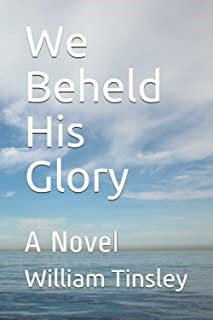
Tinsley's book, We Beheld His Glory, A Novel, is FREE as a eBook on Amazon May 19-21. 

Tuesday, May 12, 2026

Why Go To Church

 Given the secular focus of our culture with sports dominating Sundays, it is easy to conclude that very few people still attend church. But, according to the best research, that is just not the case.  More people attend church than we might think. 

 Estimates of church attendance on a given Sunday vary.  According to Gallup 30% of Americans attend  churches weekly or almost ever week.   The Pew research estimates 33% attend at least once a month and 25% at least once a week. Pew also mentions that the long-term decline in church attendance has slowed or stopped.  62% of Americans identify as Christians. The Barna Group notes that Gen Z and Millennials are driving a resurgence in church attendance.  

 This, it seems to me, is remarkable.  What other voluntary activity could attract this many people on a regular basis?  According to the most conservative estimates, between 50 million and 85 million people attend church every week.  By comparison, the average attendance per week to all MLB games combined totals less than 500,000.  Although the percentage of those attending church has declined over the years, church attendance is still a huge part of our lives. 

 As I have thought about it, I have asked myself the question, “Why do I go to church?”


I go to church because, down deep, I believe in Jesus.  I think it is what He would want me to do.  Even though the Jewish authorities turned against Him, it was Jesus’ custom to attend the synagogues.  (Luke 4:16).  And even though churches are seldom what they ought to be, I need to follow Jesus’ example.

 I go because I need to be encouraged in my faith and I want to encourage others.  While I have been disappointed by some pastors and church leaders over the years, I find that going to church lifts my spirits.  Other believers take an interest in me and pray for me.  And I seek to do the same for them. (1 Thessalonians 5:11; Hebrews 3:13; 10:25).

 I go to church because churches make the world a better place. All churches, as we know, are flawed. Someone once asked me if I knew of any churches that did not have any problems.  I asked if he knew of churches that didn’t have any people.  Where there are people, there will be problems. But most churches seek ways to feed the hungry, help the poor, comfort the grieving and care for the aging.  Churches pull us outside ourselves and call us to a higher and better world.

 I go because I want my children to go.  Even though my children are grown and gone, I still want to be an example to them, as I sought to be when I was raising them.  Going to church is a discipline. Sometimes I don’t feel like it. But I have learned over the years that the best things in life require effort.  Worship, Christian fellowship and service are disciplines that I believe are worth passing on to the next generation.  

 I am sure there are many other reasons why people attend church.  There are other reasons why I do as well, but these are the ones that stand out the most in my mind.

 If you haven’t been attending church.  I hope you will do so this week. 

Monday, May 4, 2026

Mother's Day

This week husbands, sons and daughters will elbow their way to the greeting card displays in search of the perfect card to celebrate Mother’s Day.  Florists will put on extra staff to handle the demand. Restaurants brace for business.

 Countries around the world set aside a special day for mothers. It is celebrated on the second Sunday in May in the U.S. Canada, New Zealand, Australia, India, Brazil, Germany, Ethiopia and the Philippines. Woodrow Wilson proclaimed Mother’s Day an official holiday starting on May 8, 1914. Still other nations honor mothers on different dates.

 Regardless of our nationality, ethnicity or gender, we were each carried in our mother’s womb, given birth through her labor and, in almost all cases, nursed and nourished to life by her care.  

 No office and no position wields greater power and influence over the future of humanity than the influence of a mother.  The memories and lessons given in infancy at a mother’s hand surpass every other classroom and instruction.  The faith of a mother inspires and instructs more effectively than any pulpit or pen.We see it in history, and we see it in the Bible.

 In a log cabin in Kentucky, Nancy Hanks Lincoln recognized the early gifts in her child.  She not only taught him to read, but instructed him in the principles that would shape his life.  Without Nancy, and Sarah, who became Lincoln’s step mother after Nancy died, it is unlikely that Abraham Lincoln would have ever surfaced to lead our nation in its greatest hour of crisis.

 If it were not for Moses’ mother, the world would have never known the great law-giver who led Israel from captivity and gave us the Ten Commandments.  It was she who hid him in the reeds at the river to save his infant life and it was she who cared for him in Pharaoh’s court. 

 How many mothers have petitioned God for the birth of a child, as Hannah prayed in the presence of Eli, the prophet?  Without her prayer, Samuel would not have been born, and would not have been present to anoint David, the king of Israel.

 In the fullness of time, in an obscure Galilean village, another young woman lifted up her eyes to heaven and sang, “My soul exalts the Lord, and my spirit has rejoiced in God my Savior. For He has had regard for the humble state of His handmaiden; for behold, from this time on all generations will count me blessed. For He that is mighty has done to me great things, and holy is His name.” (Luke 1:46-49).  Without Mary we would never have known Jesus, and the world would remain lost in its sins without a Savior.

 Paul referred to the importance of a mother’s faith when he wrote to his young protégé, Timothy: “For I am mindful of the sincere faith within you, which first dwelt in your grandmother Lois and your mother Eunice, and I am sure that it is in you as well.”  (2 Timothy 1:5). 

 This Mother’s Day we honor all mothers who have shaped us and made a better world