What Others Say

Bill, I have for years read your column and I am always impressed by your insight, intellect, storytelling, and theological soundness. Your pieces are joy to read and always leave me with thoughts that I reflect upon and recall later with gratefulness. -Bradley Toben, Dean Emeritus, Baylor School of Law

Monday, September 15, 2025

Remembering Buddy

 I stumbled across an old prayer:  “Lord, help me to be the man my dog thinks I am.” Anyone who has a dog will understand that prayer.  It took almost a year for me to convince my wife I should have a dog.  We had dogs when we were raising the kids, but they weren’t my dog.  They belonged to the kids and the family.  After the kids grew up, I decided I wanted my own dog, and she finally gave in, as long as I promised to take care of him. She grew to love him as much as I did and made sure he was cared for.

 My dog’s name was Buddy, a tri-color corgi who was with me most of his life.  We adopted him 16 years ago from Corgi rescue.  He had been picked up off the streets, skinny, sick and lost.  We bonded.  He wanted to be wherever I was and go wherever I went.  I usually get up about 6:30 in the morning, brew a cup of coffee and go outside on our deck to watch the sunrise, meditate and pray.  Buddy went with me. He sat nearby, sniffed the air and thought his “dog” thoughts.

 After breakfast Buddy went to my study, found his spot under my desk, and started the day’s work, napping while I wrote.  If I went downstairs to watch a ball game, Buddy stood at the top of the stairs and waited to be invited.  If I didn’t invite him, he eventually came anyway. 

 We used to go on long walks every day, usually two miles.  We had several routes which he marked on trees, fire hydrants and bushes. He always checked for “pee-mail” left by other dogs. In his later years Buddy developed arthritis in his right front leg.  Walks of a half mile or more left him limping.  Sometimes he was unable to put weight on the leg for a day or more. So, we stopped taking walks other than poop and pee walks.  The vet continued to say he was a “healthy geriatric.”  My grandchildren calculated his age in “dog years” and informed me that he is 90 years old.

 Buddy apparently thought a lot of me, even when I didn’t think much of myself. When I returned from a trip, he was beside himself. He whimpered, danced and barked like a puppy, overjoyed to see me.  When I was in a foul mood, he wasn’t.  He just waited for me to feel better.  Once, when I was overcome with grief, he jumped into my lap to comfort me.

 Across the years Buddy taught me many lessons:  patience, forgiveness, trust, acceptance.  Finally, he taught me how to grow old. Buddy never complained, had no regrets and woke up happy to greet the morning. Unfortunately, a Corgi’s life expectancy is 12 to 13 years.  Buddy made it to 14.  We had to “let him go” in January of 2022. 

 Now that I am growing old in human years, thoughts of Buddy remind me of God’s promise.  “Listen to me … you whom I have upheld since your birth, and have carried since you were born.  Even to your old age and gray hairs I am he, I am he who will sustain you.  I have made you and I will carry you; I will sustain you and rescue you” (Isaiah 46:3-5).   “Bless the Lord O my soul … who satisfies your years with good things so that your youth is renewed as the eagle.” 

Bill Tinsley's chilcren's book, Buddy the Floppy Ear Corgi, is FREE on Amazon September 13-17 as an eBook. 

Tuesday, September 9, 2025

Acts of Kindness

 Sully Sullenberger, the captain who skillfully landed US Airways flight 1549 on the Hudson River on January 15, 2009, became a household name.  After striking a flock of geese that disabled the engines, Sullenberger flew the plane like a giant glider and landed safely on the Hudson River saving the lives of 155 people on board.  For thirty years Sullenberger flew airplanes in an uneventful career.  This one act made him a national hero. The event was captured in the movie, Sully, starring Tom Hanks.

 Unlike Sullenberger, few took notice of Julien Duret, a French tourist who plunged into New York’s East River to save a two-year-old child. When Julien Duret saw Bridget Sheridan slip through the guard rail and fall into the river, he did not hesitate.  He immediately jumped into the river to save her. Later, amid all the commotion, he took a taxi and disappeared without waiting to be thanked. Like most heroes, he did not consider himself heroic.

  Few of us will be given such significant opportunities to perform heroic feats that make the news.  And even if the heroic opportunity were given to us, we might miss it. 

 Celebrated heroic actions make a difference.  They burst upon us like a torrential downpour that sweeps us off our feet. But it is the little-known acts of kindness that often make the greatest difference.  They are like the raindrops that pool into freshwater lakes and nourish the earth.  

 Jesus recognized the importance of heroic and sacrificial actions.  He said, “Greater love hath no man than to lay down his life for his friend.”  Of course, this is what He did when He went to the cross and laid his life down for us. But He also taught the importance of little acts of kindness.  In fact, it might very well be that the little acts of kindness we choose to do every day have a far greater impact in transforming the world than a few famous acts of heroism.

 All of us have opportunity every day to perform little acts of kindness.  We all have opportunity to let someone else in line before us, to hold a door open for a stranger, to speak a kind and encouraging word to the cashier who wearily scans countless items at the checkout counter.  We can all be kind to a waitress who works for a minimum wage to support her child, or a student working nights to pay for college. 

 A friend recounted his visit to Arby’s.  Completing a cell phone call, he watched from his car as a large woman frantically searched the back seat of her car. He asked if there was a problem. She told him she had a roll of quarters she was going to use to buy lunch, but she could not find them.  He pulled out a $10 bill and asked, “Will this help?”  She refused.  He insisted.  Inside he stood behind the rattled woman as she thanked him profusely.  She said, “God sent you, you know.”   When the cashier delivered his order she said, “The manager was watching and he went ahead and gave you a free sandwich.” 

 Little acts of kindness add up. All put together, they can change the world. Jesus said, “In that you have done it to the least of these, you have done it to Me” (Matthew 25:40).

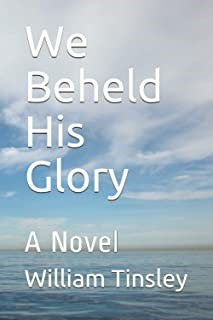
Tinsley's novel, We Beheld His Glory is free as an eBook on Amazon September 9-11.

Tuesday, September 2, 2025

Importance of Character and Decency

 It has been seven years since John McCain died.   I always admired the Senator for his courage and heroism as a Vietnam POW.  I admired him even more for his character as an elected official and candidate for President.

 He provided his own assessments regarding himself and his life: his 1991 memoirs, Faith of My Fathers and the book written just before his death, The Restless Wave.  Both books are well written, engaging, inspiring and, in some cases, prophetic.

 The first book opens with words from the hymn, “Faith of Our Fathers.”  In the second he states,  “What God and good luck provide we must accept with gratitude. Our time is our time. It’s up to us to make the most of it, make it amount to more than the sum of our days.” 

 What stands out in my mind regarding John McCain is his decency, his respect for other people, even his adversaries.  On Memorial Day 1993, he returned to Hanoi, the place where he had been imprisoned and tortured.  Over the next two years he gave leadership that resulted in normalized relations with Vietnam. Vietnam’s foreign minister said, “It was he who took the lead to significantly heal the wounds of war.”

 I remember the moment during his 2008 campaign for the Presidency.  He was speaking in a high school near Minneapolis, taking questions from the audience.  A woman was handed the microphone.  She said, “I do not believe in, I can’t trust Obama.  I’ve read about him and he’s not a … he’s an Arab.” 

 McCain quickly reached for the mike and corrected her. “No ma’am.” He said, “He’s a decent family man and citizen that I just happen to have disagreements with.”  When others tried to label Obama as a terrorist and a Muslim, McCain stated, “He is a decent person and a person you don’t have to be scared of as President of the United States.” 

 At Senator McCain’s request, Presidents Obama and George W. Bush were scheduled to speak at his funeral.

 Even more than his legendary heroism as a POW for 5 years in Vietnam, McCain’s most important legacy might well be his commitment to decency, respect, honesty, integrity and humility, character qualities that can guide us to a better future.

 These are the Christian qualities demonstrated by Jesus toward the poor, the outcast and His own accusers, including the very soldiers who crucified Him.  They are the qualities exhorted by the Apostle Paul who challenged believers “to be ready for every good deed; to malign no one, to be peaceable, gentle, showing every consideration for all men.” (Titus 3:1-2).

Monday, August 25, 2025

How Can You Go To Heaven

 Several major news sources, including the New York Times and USA Today, reported President Trump’s August 19 comments on Fox & Friends regarding his hopes of going to heaven.  In the interview, speaking of his efforts for peace in Ukraine, President Trump reportedly said, "I wanna try and get to heaven if possible. I'm hearing I'm not doing well. I am really at the bottom of the totem pole. But if I can get to heaven, this will be one of the reasons."

 It is a good thing to want to create peace.  And it is a good thing to want to go to heaven.  Almost everyone shares that desire.  We should pray for President Trump on both counts. But this raises a question.  How does anyone get to heaven?

 Mother Teresa said, “I know that when we die and it comes time for God to judge us, He will not ask, ‘How many good things have you done in your life?’”   “My key to heaven is that I loved Jesus in the night.”

 Billy Graham said, “I am not going to heaven because I am a preacher. I am going to heaven entirely on the merit of the work of Christ.” 

 The Bible is clear  that none of us can achieve a level of goodness to deserve heaven.  Romans 3:23 says, “All have sinned and come short of the glory of God.”  Romans 6:23, “The wages of sin is death but the gift of God is eternal life through Jesus Christ our Lord.”  Romans 5:8, “God demonstrates His own love for us in that while we were yet sinners, Christ died for us.” Romans 10:9-10, “If you confess with your mouth Jesus as Lord and believe in your heart that God raised Him from the dead, you will be saved, for with the heart a person believes resulting in righteousness, and with the mouth he confesses, resulting in salvation.” 

 Paul put it like this: “For by grace you have been saved through faith; and this is not of yourselves, it is the gift of God; not a result of works, so that no one may boast,” (Ephesians 2:8-9). It is only by God’s grace through faith that any of us enter heaven, and that faith must be more than lip service or hypocrisy.  James stated, “But someone may say, “You have faith and I have works; show me your faith without the works, and I will show you my faith by my works.”

 Peter summed it up, “Blessed be the God and Father of our Lord Jesus Christ, who according to His great mercy has caused us to be born again to a living hope through the resurrection of Jesus Christ from the dead, to obtain an inheritance which is imperishable, undefiled, and will not fade away, reserved in heaven for you, who are protected by the power of God through faith for a salvation ready to be revealed in the last time, (1 Peter 1:3-5).

Monday, August 18, 2025

What If?

 It is one of the tiniest words:  two letters, one syllable.  But it is filled with enormous consequence and limitless potential. “If.” 

 Rudyard Kipling caught the limitless potential of “if” in his poem:

 If you can keep your head when all about you

 Are losing theirs and blaming it on you,
If you can trust yourself when all men doubt you,
  But make allowance for their doubting too;
If you can wait and not be tired by waiting,
  Or being lied about, don’t deal in lies,
Or being hated, don’t give way to hating,
  And yet don’t look too good, nor talk too wise: ...

You probably know the rest of the poem.  Most of us memorized it in school.

 We are at one of those “if” moments in our nation. The racial prejudice and unrest spilling into our streets challenge us with “if.”

 James A. Michener commented on the power of this little word in his classic novel, Centennial.  He wrote, “If is a word of infinite intellectual significance, for it indicates actions not yet completed but with the possibility of alternate outcomes.”

 We face “if” moments every day of our life.  I met a stranger at a Brat Fest in Estes Park, Colorado.  We struck up a conversation about faith.  He told me his father died when he was 15 and he spent many years mad at God.  He wasted his life with drugs, alcohol and sex until 2003 when he gave his life to Christ.  Faith in Christ set him free from his addictions.

The word “if” implies we are no longer prisoners to previous patterns.  We have options. Jesus said, “If the son sets you free, you shall be free indeed.” (John 8:36).

Every day we measure the consequences of “if.”   If a certain thing happens, then “this” will occur.  But, if something else takes place, then “that” will occur.  If I choose this path or this action, then “this” will be my destination and the result.  A thousand times in the smallest moments, we measure the consequence of “if.”  And, occasionally, we are faced with choices that will determine our destiny.  

 The Bible challenges us with this tiny but powerful word: 

 “If my people, who are called by my name, will humble themselves and pray and seek my face and turn from their wicked ways, then I will hear from heaven, and I will forgive their sin and will heal their land.”  (2 Chronicles, 7:14)

 “But if you seek the Lord your God, you will find him if you seek him with all your heart and with all your soul.  When you are in distress and all these things have happened to you, then in later days you will return to the Lord your God and obey him.  For the Lord your God is a merciful God; he will not abandon or destroy you or forget the covenant with your ancestors, which he confirmed to them by oath.” (Deuteronomy 4:29-31).

Tuesday, August 12, 2025

Overcoming Fear

 We all know that sex sells. Companies have used sex to sell everything from cars to cabbage. But sex seems to be yielding its throne in the marketplace. Fear may be surpassing sex as the emotion of choice for marketers who want to control commerce and politics.

Life insurance, annuities, real estate, technology and political candidates are all marketed through the advertising of fear. Fear sells. Marketers call it “shockvertising.” It is sometimes referred to as “fear mongering.” Companies know that FOMO (Fear of Missing Out) is one of the most powerful motivators for purchase of their products.   Politicians portray their adversaries as the devil and warn the world will sink into the apocalypse if we aren’t careful.  

We have always lived with fear. Those of us who grew up in the 1950s learned to “duck and cover” beneath our desks in the event of a nuclear attack. (How much protection that would have provided, I don’t know.) Many of us lived through the cold war, the Star Wars arms race, Y2k hysteria, 9-11 and Covid. Adults under 30 have no memory of walking freely into an airport terminal without TSA security.

 Every generation of every age has had reason to fear.  But, like those who have gone before us, we must not surrender.  We must live our lives with courage, confidence and hope.

God does not desire that we live in fear. In Isaiah He says, “Do not fear, for I am with you.  Do not look anxiously about you, for I am your God.  I will strengthen you; I will help you.  Surely, I will uphold you with my righteous right hand,” (Isaiah 41:10-11).

 Jesus spoke a great deal about fear and how to overcome it. Speaking to his disciples, Jesus said, “Who of you by worrying can add a single hour to your life? Since you cannot do this very little thing, why do you worry about the rest? … Do not be afraid, little flock, for your Father has chosen gladly to give you the kingdom.” (Luke 12). When the disciples were on the sea, struggling against the wind in the dark, Jesus came to them and said. “Take courage! It is I. Don’t be afraid.”

 The Apostle Paul wrote, “For God hath not given us the spirit of fear; but of power, and of love, and of a sound mind. (2 Timothy 1:7).

It is important that we not fall victim to the fear tactics of market manipulators and politicians. It is important that we find faith that frees us from the paralyzing fears that can rob us of power and love and a sound mind. 

Monday, August 4, 2025

Listen Up!

 My wife is a great listener.  That is one of the reasons I married her.  She listens intently, not just to me, but also to anyone speaking to her. I once watched a total stranger stop her on the street in New York and spill out their life story.  I have witnessed the same thing on subways, in train stations and shopping centers in the U.S. and Europe.  You can see it in her eyes.  She focuses.  She doesn’t glance around the room wondering if there is someone else she should speak to. She doesn’t look beyond you.  Her eyes don’t glaze over in a fixed stare that pretends to listen while she thinks about something else. 

 I lose focus.  One word can trigger any number of divergent thoughts causing my mind to race off in pursuit like a dog chasing cats.  At other times I leap ahead, thinking about what I want to say rather than listening to what is being said.  I have to discipline myself to re-focus on what is being said, sometimes scrambling to piece together the gaps that I missed during my mental lapses. 

 My wife knows this. She can see it in my eyes.  Sometimes she will stop talking and the silence will awaken me from my temporary daydream.  “You’re not listening,” she says.  Of course she is right.  But occasionally I am lucky enough to be able to repeat the last sentence that she spoke, retrieving it from some kind of digital recording in my head, even though its meaning was not being registered in my brain.

 Listening is a powerful gift. It is transformational. When someone listens to us without judgment or accusation, we hear and see ourselves differently. Somehow the act of having someone truly listen enables us to sort through our emotions and confusions to reach better conclusions.  Feelings of isolation and loneliness dissolve and melt away when someone listens to us. The listener, by listening, has the ability to heal.

 Most of us are far more intent on being heard than hearing. When we pretend to listen, we are, more often simply waiting for a gap, a chance in the conversation to insert our already preconceived conclusions. We interrupt one another with conversations that often are running on different tracks.

 How many times have we injured someone, or simply failed to help someone, because we were too quick to speak?  How different our world would be if parents listened to their children; if bosses listened to their employees; if businesses listened to their customers; if politicians listened to the people; if persons in power listened to each other?  Maybe if we were better at listening to one another, we might be better at listening to God.

 The Bible says, “Everyone must be quick to hear and slow to speak.”  (James 1:19).  God says, “Listen carefully to Me, and eat what is good, and delight yourself in abundance. Incline your ear and come to Me. Listen, that you may live” (Isaiah 55:2-3).