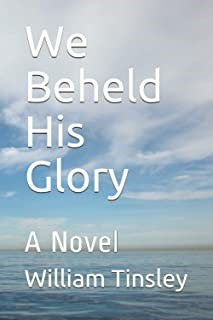
What Others Say

Bill, I have for years read your column and I am always impressed by your insight, intellect, storytelling, and theological soundness. Your pieces are joy to read and always leave me with thoughts that I reflect upon and recall later with gratefulness. -Bradley Toben, Dean Emeritus, Baylor School of Law

Monday, February 6, 2017

Doomsday Clock

Last week the Bulletin of Atomic Scientists moved the Doomsday Clock 30 seconds closer to midnight.  Humanity is now only two and one-half minutes away from total annihilation.  It is the closest the Doomsday Clock has been to the moment of ultimate catastrophe since 1953.

The Doomsday Clock was created by scientists in 1947, after World War II, to warn the world of the nuclear dangers that lay before us.  Those of us who were children in the 1950s can remember bomb drills, hiding beneath our desks (as if that would have saved us).  My uncle built a bomb shelter in his back yard, stocked it with food, batteries and a radio to hide from the ultimate disaster.

We haven’t thought about the Doomsday Clock in a while.  When the Soviet Union dissolved in 1991, the clock was set back to 17 minutes to midnight.  But, with the recent rhetoric and saber rattling by powers that possess the ultimate weapon, scientists have moved it to within 150 seconds of our doom.  Last week, Mikhail Gorbachev, the man who oversaw the dissolution of the Soviet Union, was quoted in Time Magazine, “Politicians and military leaders sound increasingly belligerent and defense doctrines more dangerous ... It looks as if the world is preparing for war."

While some fear the threat of nuclear war, others fear global warming, pollution of the environment or genetically engineered viruses.  In 2014 Stephen Hawking stated that he believed development of full Artificial Intelligence could result in the annihilation of the human race. “Once humans develop Artificial Intelligence, it will take off on its own and redesign itself at an ever increasing rate. Humans,” he warned, “... would be quickly superceded.”

Predictions for the end of the world are not new.  Jesus spoke of it when He said, “For then there will be a great tribulation, such has not occurred since the beginning of the world until now, nor ever will. Unless those days had been cut short no life would have been saved; but for the sake of the elect those days will be cut short.” (Matthew 24:21-22)  Peter predicted, “The present heavens and earth are being reserved for fire, kept for the day of judgement.” (2 Peter 3:7)  John wrote the book of Revelation predicting the end of time and the ultimate battle between good and evil.

The Bible is not just a “feel good book.”  The Bible deals with real dangers, real life and death issues.  It warns us of the dangers of pursuing prejudice, violence, hatred, greed, anger and lust.  Those paths always end in death and destruction.


But the Bible offers hope. Any individual and any generation can turn from their sins, place their trust in God and receive His loving forgiveness through Jesus Christ and be saved. Left to our own devices, we are doomed.  But God has prepared something better. “For behold, I create new heavens and a new earth; And the former things will not be remembered or come to mind.” (Isaiah 65:19).  “But according to His promise we are looking for new heavens and a new earth, in which righteousness dwells. (2 Peter 3:13).

Tuesday, January 31, 2017

Welcoming the Stranger

Last Friday, with one stroke of his pen President Trump swept away more than two centuries of American history in which we prided ourselves on our generosity, our goodness and our commitment to embrace the oppressed.  He replaced it with fear and self-interest. With that same stroke of his pen, he struck through the famous words inscribed on the Statue of Liberty: “"Give me your tired, your poor, your huddled masses yearning to breathe free, the wretched refuse of your teeming shore. Send these, the homeless, tempest-tossed to me, I lift my lamp beside the golden door!"
                                                                                                                     
Trump’s order prohibited travel from seven mostly-Muslim nations.  None of the terrorists who successfully carried out attacks on U.S. soil came from any of these countries.

But, we all came from somewhere.

Native Americans came first, beating all of us to this continent by a few thousand years.  My “multi-great” grandfather, Thomas Tinsley, landed in Jamestown in 1638 after a risky voyage across the Atlantic. My mother’s family, the Harpers, came later from Ireland. Along with them came others from Norway, Poland, Germany, Italy, and a host of captives from Africa. They were followed by still more from Asia, including refugees from Vietnam, Cambodia, and Laos. We have come from every corner of the earth. We are a nation of immigrants. 

We are one nation with many ethnicities embracing every skin color and many languages. More than 90 languages are spoken in Houston.  Polish is the third largest language group in Chicago with a Polish population equal to Warsaw. 

We like to keep the teachings of Jesus in the tepid category. We don’t like for Him to mess with our assumptions.  But this is what got Him into trouble.  His teachings are radical when it comes to loving people who are different than we are.

The Jews of Jesus’ day despised Samaritans.  But Jesus specifically went out of his way to enter Samaria and to visit with a Samaritan woman.  When she pointed out that the Samaritans worshipped at Mt. Gerazim while Jews worshipped in Jerusalem, Jesus replied, “An hour is coming, and now is, when the true worshipers shall worship the Father in Spirit and in truth.”

When Jesus wanted to illustrate what it means to love our neighbor, He told of a amaritan who risked his own safety to help a stranger who had been beaten and left for dead. 

When Jesus introduced himself to the synagogue in his hometown at Nazareth, he infuriated the crowd by stating that God loved the Syrians. He reminded them that Elisha healed a Syrian leper when there were many lepers in Israel. They were so enraged they tried to throw Jesus off a high cliff.  (Luke 4:16-30).

Today the oppression in Syria represents the world’s greatest refugee crisis.  Eleven million Syrians, more than half of them children, have fled the brutal attacks by ISIS. Most of them are Muslim. But many Christian organizations are reaching out to these refugees providing shelter, blankets, water, food and comfort. Virtually every denomination is represented as well as para-church groups like Samaritan’s Purse and World Vision.


We are always afraid and suspicious of people who are different than we are. But “perfect love casts out fear.”  Isaiah says, “Hide the fugitives, do not betray the refugees.  Let the fugitives stay with you; be their shelter from the destroyer. The oppressor will come to an end, and destruction will cease; the aggressor will vanish from the land.”  (Isaiah 16:3-4).

Monday, January 23, 2017

What We Know

No one knows what you know.  And everyone else you meet knows things you don’t.  Even though my wife and I have been married 48 years, we each know things the other doesn’t.   

At birth we know nothing, but very early in life our knowledge base, which is built on observation and experience, begins to form.  Perhaps due to the fact that we shared a significant common base of knowledge in our formative years, most of us tend to remain close to those siblings and friends for a lifetime who shared our earliest years. 

But as we grow, our knowledge differs. We follow different paths, study different subjects, pursue different careers, live in different places and meet different people. Our individual knowledge becomes unique, like our fingerprints.   

The pursuit of knowledge is a good thing. And we should celebrate each achievement that increases our knowledge. But how much does any one of us really know?  And how much do we all know if the knowledge of every human being could be combined? 

Scientists are continually trying to piece together the puzzle of the past, to reconstruct our origins and the path we have taken to get to where we are. Since 2012 physicists have been celebrating what appears to be the discovery of the Higgs boson, what some refer to as the “God particle,” which could answer the origin of all mass and the fate of our universe.

Even with this discovery, the sum total of our scientific, philosophical and historic knowledge represents only a small fragment of the total knowledge in the universe. The more we discover, the more we realize what we don’t know.  The puzzle pieces of the past are often misleading, causing us to rearrange and reconfigure our preconceived ideas.

Solomon, who was famous for his wisdom, wrote, “I concluded that man cannot discover the work which has been done under the sun.  Even though man should seek laboriously, he will not discover; and though the wise man should say, ‘I know,’ he cannot discover.” (Ecclesiastes 8:17).

Perhaps the most important discovery is not what we know, but the fact that we are known.  David stated, “You know when I sit down and when I rise up; You understand my thought from afar. You scrutinize my path and my lying down, and are intimately acquainted with all my ways.Even before there is a word on my tongue, behold, O Lord, You know it all.”

The Apostle Paul wrote, “ For now we see in a mirror dimly, but then face to face; now I know in part, but then I will know fully just as I also have been fully known.” (1 Corinthians 13:12).

As we expand our personal knowledge and strive to understand the universe, we can live with confidence that the One Who made it all knows us and loves us as He demonstrated in His Son, Jesus.  

Sunday, January 15, 2017

Teachable Moments

A few summers ago, my wife and I had the privilege of keeping our grandchildren for a few weeks in Montana.  They were 8, 10 and 11.  We normally saw them for a few days two or three times a year.  I felt like Santa Claus, showering them with presents every time we saw them, then disappearing. We weren’t part of their daily lives. So we were excited to have a few weeks with them and looking forward to meaningful conversations.

We enrolled them in Vacation Bible School in a church in Billings.  They weren’t excited about Vacation Bible School, but they agreed to give it a try.  They loved it.  On the second day, my wife was doling out one dollar bills to each of them and instructing them to place the dollar in the offering.  Our 11-year-old granddaughter refused to accept the dollar.  “I am going to give my own,” she said, a dollar she had earned the week before.  “Your offering will have a special blessing,” I told her, “because it is your own gift and it costs you something.”  I then told her about the poor widow who gave two small coins. “She has given more than all the rest of them,” Jesus said, “because she gave all that she had.”  When I let them out, she bounced into church clutching her dollar a little more tightly and beaming a little more brightly. 

The third day I picked them up from VBS and my 10-year-old grandson asked, “Granddaddy, what is a prostitute?”  I hesitated a moment, a little stunned by the question.  Then I told him, “A prostitute is a woman who has sex with men for money. Why do you ask?”

He replied, “I saw a billboard that said, ‘Before meth I had a daughter.  Now I have a prostitute.’  What does that mean?”  (He was one of those kids that reads everything.)  I told him, “That means that someone had a daughter they loved very much who became addicted to drugs and started having sex with men for money so she could buy more drugs.  It is a very bad thing.” 

My 8-year old, wanting to be part of the conversation asked, “What does all THAT mean, granddaddy?”  I was saved by his older brother who turned to him and said, “Don’t ask.  It’s inappropriate information for us children.”

Teachable moments come when they will.  We cannot predict them. It is kind of like playing baseball.  You never know when the ball might be hit your way.  You just have to always be ready to respond in the best way you know how.

Jesus was the master of using the teachable moment with His followers.  Once a group of men brought a woman to Him who had been caught in the act of adultery.  They stood ready to stone her according to the Law of Moses, but Jesus wrote something in the dirt beside her and challenged them.  “Let him who is without sin cast the first stone.”  One by one they dropped their stones and left.  When all were gone Jesus said to her, “Woman, where are they? Did no one condemn you?” She said, “No one, Lord.” And Jesus said, “I do not condemn you, either. Go. From now on sin no more.”


Life is filled with teachable moments when God wants to teach us a better way and help us teach our children and grandchildren.  

Monday, January 9, 2017

Freedom to Believe

I have not seen Martin Scorcese’s new movie, Silence.   It has not yet come to a theater in our area. According to the synopsis, “A 17th century Portuguese Jesuit priest receives word that his mentor has renounced his faith while on a mission in Japan. Concerned, he travels to the island nation with another clergyman to investigate, only to find that the country's Christian population are being systematically exterminated. Witnessing the inglorious reality of torture and martyrdom committed against Japanese Christians rocks his faith to the core.”

The story is based on historic events. Christianity had been introduced to Japan in the 1540s and quickly took root with more than 100,000 converts.  But the government quickly saw the Christian faith as a threat and launched bitter persecution against Christian believers. Many were tortured and killed. The Christian faith went underground for centuries.

In the majority of the world today, faith in Jesus Christ comes at a high price. According to the Pew Research Center over 75% of the world’s population live in areas of severe religious restrictions.  Egypt, Indonesia, Pakistan, Russia and Turkey had the highest levels of religious restrictions.  The Pew report stated that “When we analyzed religious restrictions imposed by government, China, the world’s largest country by population, had the highest level.”

The U.S. Department of State’s annual International Religious Freedom report noted that “in Russia the government passed a new law limiting activity in houses of worship.  The law imposes strict new reporting requirements for religious groups seeking to organize events and ceremonies in public spaces.”

I sometimes wonder what my prayers sound like in God’s ear compared to the prayers of those who suffer imprisonment, torture and discrimination for their faith in Christ. I am afraid that many of my prayers center upon my own convenience and comfort, and that of my family and friends.

Jesus was clear regarding persecution for His followers.  “If the world hates you, you know that it has hated Me before it hated you. If you were of the world, the world would love its own; but because you are not of the world, but I chose you out of the world, because of this the world hates you. Remember the word that I said to you, ‘A slave is not greater than his master.’ If they persecuted Me, they will also persecute you.” (John 15:18-20). 

The writer of Hebrews reminds us, “Others experienced mockings and scourgings, yes also chains and imprisonment.  They were stoned, they were sawn in two, they were tempted, they were put to death with the sword; they went about in sheepskins, in goatskins, being destitute, afflicted, ill-treated (men of whom the world was not worthy), wandering in deserts and mountains and caves and holes in the ground. ... Consider Him who has endured such hostility by sinners against Himself, so that you will not grow weary and lose heart.  You have not yet resisted to the point of shedding blood in your striving against sin.” (Hebrews 11:35-12:4).


Across the centuries, persecution has been the norm for followers of Christ. Our protections for religious freedom in America are unique. We must preserve, protect and extend these freedoms to all faiths and all forms of worship.  How then should we pray?  And how then should we live? 

Tuesday, January 3, 2017

Time and Immortality

 More than any other occasion, the New Year marks the passage of time.  We celebrate it with the dropping ball in Times Square, fireworks that ignite the night sky, fresh cut flowers in the Rose Parade, stadiums that vibrate with energy as the best college teams face off against each other.  2016 is history and 2017 has come.

On New Year’s Eve, as I do every year, I took time to write down my reflections on the year past: the goals I achieved, and the ones I failed to meet, the major events that surprised me along the way.  On New Year’s Day, I wrote down my expectations for the year to come: what I hope to accomplish, my goals and dreams. The process reminds me how swiftly the time has flown.  
                                                                                                                                              
Time waits for no one.  We live it, and we measure it. We try to capture the moments with videos and photos, but the time continues to fly.  By the time I write this sentence, and by the time you read it, the moment of the writing, and the moment of the reading is gone, never to return. Every moment of every day, week, month and year, time marches on.

We can remember what was and we suspect that somewhere in the universe the past still exists, just as we experienced it. We can imagine the future, but have no way of knowing what it holds. Only the present is ours, and it slips quickly through our grasp to join the memories of our past. It is the mark of our mortality. We are prisoners and servants of time.  No measure of wealth can restrain it.  No power on earth can contain it.

Our mad dash to get ahead, to climb the ladder of success, to add to our possessions, to get to our destination faster are symptoms of our mortality.  We know that our time is limited.  There are only so many hours in the day, and so many days in a lifetime.

The Bible agrees with this sense of mortality.  Ecclesiastes says, “There is a time for everything and a season for every activity under the heavens, a time to be born and a time to die.”  (Ecclesiastes 3:1-2).  And again, “It is appointed for men to die once, and after this comes judgment.” (Hebrews 9:27)

Only God is beyond time.  He is the great “I AM.”  He has no beginning and no end.  Past, present and future are alike to Him.  John wrote of Jesus, saying, “In the beginning was the Word and the Word was with God and the Word was God. He was with God in the beginning. All things came into being through Him, and apart from Him nothing came into being that has come into being.” (John 1:1-3). Jesus said, “Before Abraham was born, I am.” (John 8:58).


God invites us to transcend time and enter into His immortality. Jesus said, “I give eternal life to them, and they will never perish.” (John 10:28).  “I am the resurrection and the life; he who believes in me will live, even if he dies, and everyone who lives and believes in me will never die.” (John 11:25-26).

Sunday, December 25, 2016

Looking Back So We Can Look Ahead

A year ago we welcomed 2016 as a bouncing baby boy, wearing nothing but a diaper, a top hat and a sash.  In these final days, we are watching 2016 shuffle off the stage beaten, bruised and battered, with shaggy hair and slumped shoulders, his sash tattered and torn.  It has been a rough year.

Along the way we said goodbye to celebrities who shaped our landscape: Florence Henderson, mother of the Brady Bunch; Leonard Cohen who taught us to sing “Hallelujah;” Merle Haggard, the “Okie from Muskogee” who died on his 79th birthday; Arnold Palmer, “The King” of golf; Gene Wilder, who took us on wild journeys through a Chocolate Factory, aboard the Silver Streak and Blazing Saddles. We said goodbye to Muhammad Ali who “floated like a butterfly and stung like a bee. ” We wished a final “God speed” to John Glenn, who inspired us with the “Right Stuff.” There are many others.

More importantly, we remember those whose names few others know. We remember those who, in quiet ways with little fanfare, inspired us with their courage, faith and love.  The Washington Post ran a collection of stories about such people this week, written by some of their best writers titled, “Grace Unwrapped, stories that prove kindness blossoms during the holidays.” 

Each of us have family and friends who left legacies of faith and courage.  I think of my father.  When he was diagnosed with multiple-myeloma in 1974 and volunteered for experimental drugs, knowing the risk. He died 2 years later at age 53 leaving a legacy of courage, faith and friendship.  He was a blue collar worker who was employed by Bell Telephone for 25 years. The day before he died he sent a get-well card to a friend on another floor of the hospital where he was fighting for his life. Hundreds attended his funeral. My mother lived as a widow for 35 years and, like my father, left a legacy of faith, courage and love.  The day before she died she visited with her grandchildren, prayed with them and blessed them.  She was 89.

 The Bible teaches us to look back and remember people who can inspire us.  Hebrews 11 gives a long list of those who left a legacy of faith: Abel, Enoch, Noah, Abraham, Sarah, Jacob, Moses, Joshua, Rahab, Gideon, Barak, Jephthah, David, Samuel and the prophets. 


As we turn our eyes toward 2017, we can draw from those who have blessed our lives. We can face our challenges with courage and hope. As the Hebrews writer concludes, “Seeing we have so great a cloud of witnesses surrounding us, let us lay aside every encumbrance and the sin which so easily entangles us, and let us run with endurance the race that is set before us, fixing our eyes on Jesus, the author and perfecter of faith.” (Hebrews 12:1-2).